
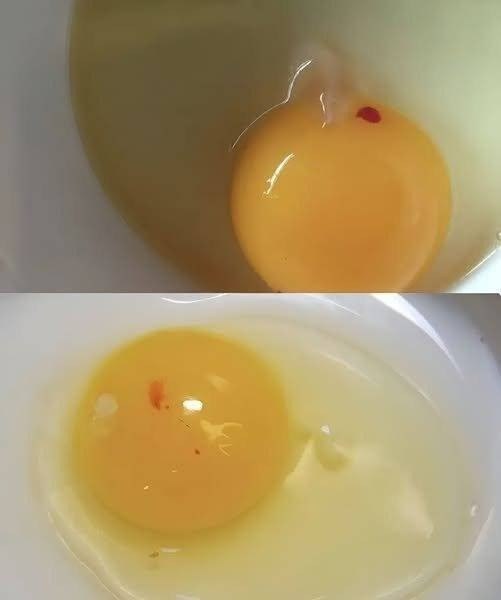
The Truth About Those Red Spots in Your Eggs: Are They Safe to Eat?**
You crack open an egg, ready to cook a simple breakfast — and suddenly you see it: a small red or reddish-brown spot on the yolk or mixed into the egg white. If you’ve ever wondered *what that spot is — and whether it’s safe to eat* — you’re not alone. These tiny imperfections can surprise anyone, from seasoned home cooks to professional chefs. In this post, we’ll explore what red spots are, why they appear, whether they’re safe, how to reduce their occurrence, and a few cooking tips to help you make the most of every egg.
🥚 What Are Red Spots in Eggs?
Those reddish or brown flecks you sometimes see in raw eggs are typically called **blood spots** (or meat spots). They most often appear on the yolk, but can also be scattered in the egg white.
🌟 Blood Spots vs. Meat Spots
Blood spots: These are small specks or larger patches of blood — usually from a ruptured blood vessel during the egg’s formation in the hen’s reproductive tract.
Meat spots: Often darker, irregular specks believed to be bits of tissue from earlier in the reproductive system.
Both are *natural* and not usually a sign of disease or contamination.
🐔 Why Do Red Spots Appear?
To understand red spots, a quick look at how an egg forms helps:
1. Egg formation: Eggs develop inside a hen. The yolk is released from the ovary and travels through the oviduct, where egg white (albumen) and the shell are added.
2. Blood vessel rupture: Occasionally, a tiny blood vessel on the yolk’s surface ruptures as it forms — resulting in a blood spot.
3. Natural variation: Like freckles on people, some eggs just naturally have these spots.
A few reasons red spots may appear include:
Young or older hens: Younger hens may have immature reproductive systems, which can lead to more blood spots.
Genetics: Some chickens are more prone to blood spots than others.
Environmental stress: Heat, stress, or abrupt changes in diet may contribute to more frequent blood spots.
🍽️ Are Red Spots Safe to Eat?
Yes. In most cases, red spots in eggs are completely safe to eat. They don’t mean the egg is rotten or contaminated.
Here’s what food safety experts say:
Blood spots are harmless and don’t affect nutritional value or quality.
The egg is still good — as long as it smells fine and the shell isn’t cracked or slimy.
You can simply remove the red spot with the tip of a knife or spoon if it bothers you, but it’s not required.
The real safety concerns with eggs are things like salmonella contamination — which has nothing to do with red spots and is related to bacteria sometimes found on or inside eggs. Proper cooking and handling help mitigate those risks (more on that later).
