
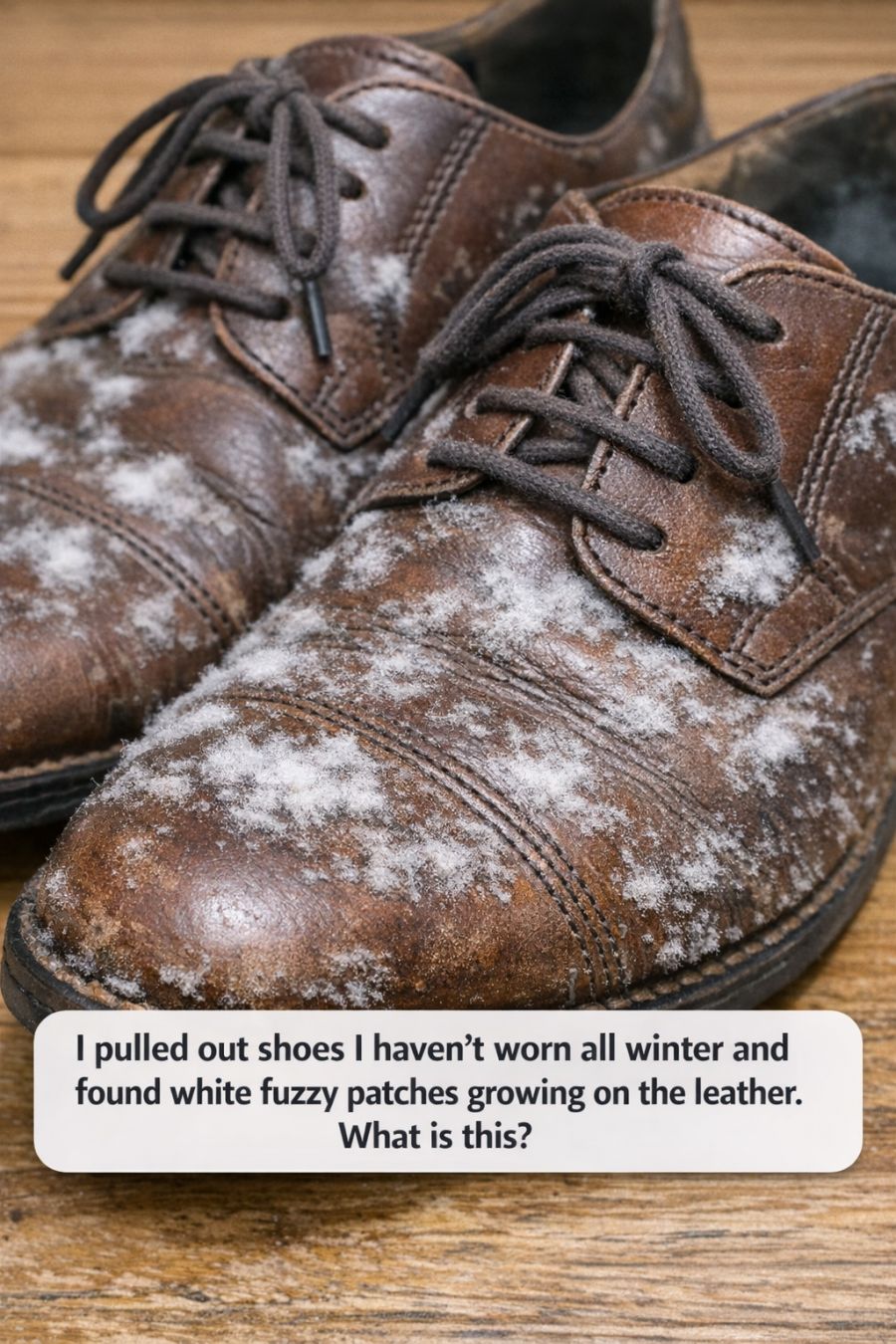
You open the closet, reach for a favorite pair of shoes you haven’t worn all winter, and—ugh. White, fuzzy patches have appeared on the leather. They look alive. They definitely weren’t there when you put the shoes away.
Now the questions start racing:
Is this mold?
Is it dangerous?
Are my shoes ruined forever?
Take a breath. This is very common, especially with leather shoes stored for long periods—and in most cases, it’s completely fixable.
Let’s break down what those white fuzzy patches really are, why they appear after months of storage, how to tell similar causes apart, and exactly what to do next.
What Are the White Fuzzy Patches on Leather Shoes?
In most cases, those white fuzzy or powdery patches are mold or mildew growing on the leather.
Leather is made from animal hide, which means it’s organic material. When leather sits in a dark, humid, poorly ventilated space, it becomes an ideal breeding ground for mold spores that naturally exist in the air.
Winter storage conditions are often the perfect storm:
Shoes aren’t being worn or aired out
Closets stay closed for months
Indoor humidity rises
Dust and moisture settle into the leather
The result? Mold growth that appears as white, gray, or slightly fuzzy patches.
Could It Be Something Else?
Yes—though less commonly, it could be one of these:
1. Mold or Mildew (Most Likely)
✔ Fuzzy or powdery texture
✔ White, gray, or slightly greenish
✔ May have a musty smell
✔ Grows in patches or spots
2. Leather Bloom (Less Common, Not Dangerous)
This happens when natural oils or waxes in leather rise to the surface over time.
✔ White haze or powder
✔ Wipes off easily
✔ No smell
✔ Not fuzzy
If it looks fuzzy or textured, it’s almost always mold—not bloom.
Is Mold on Shoes Dangerous?
For most people, light mold on shoes isn’t dangerous, but it can cause issues if ignored.
Potential problems include:
Worsening allergies or asthma
Skin irritation for sensitive individuals
Mold spreading to other shoes or clothing
Permanent leather damage if untreated
The key is not letting it sit.
Are Your Shoes Ruined?
Good news: Usually, no.
If the mold is caught early and hasn’t deeply penetrated the leather, your shoes can almost always be saved.
Shoes are usually only beyond repair if:
Mold has eaten into the leather fibers
The leather feels soft, cracked, or slimy
There’s a persistent odor that won’t go away
Most winter-storage mold is surface-level.
How to Safely Clean Mold Off Leather Shoes
Step 1: Take Them Outside
Never clean mold indoors—it releases spores into the air.
Step 2: Dry Brush First
Use a soft brush or dry cloth to gently remove loose mold.
Step 3: Wipe With Vinegar or Rubbing Alcohol
Mix:
1 part white vinegar or rubbing alcohol
1 part water
Lightly dampen a cloth and wipe the affected areas.
Step 4: Let Them Dry Completely
Air-dry in indirect sunlight or a well-ventilated space.
Step 5: Condition the Leather
Mold and alcohol dry leather out. Use a leather conditioner once dry to restore moisture and prevent cracking.
How to Prevent This From Happening Again
To keep shoes mold-free during storage:
Store shoes completely dry
Use silica gel packets or moisture absorbers
Avoid plastic bags—use breathable shoe bags
Crack the closet door occasionally for airflow
Wipe leather with conditioner before long storage
Rotate shoes, even in winter, if possible
Leather likes to breathe—sealed, damp environments are its worst enemy.
