
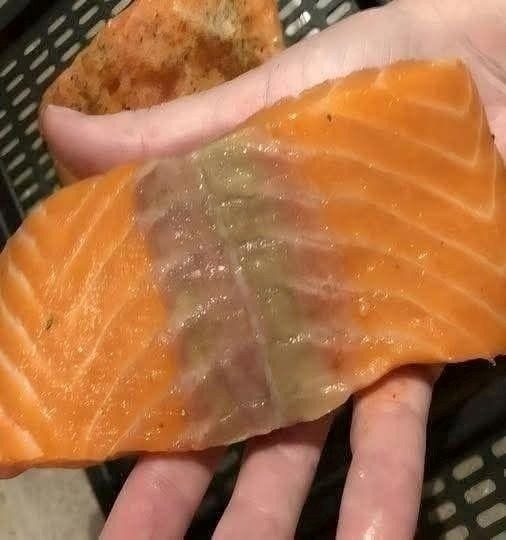
You’re not imagining things — salmon can develop strange-looking colors after being stored, and a yellow stain can be alarming. But before you panic, it helps to know what it could be and whether the fish is still safe to eat.
Here’s what that yellow stain might mean, and what to do next.
1. It Could Be “Fat Bloom” (Common and Harmless)
The most common cause of a yellow or pale discoloration on salmon is fat bloom.
What is fat bloom?
Salmon has natural fat.
When stored in the fridge, especially for several days, the fat can rise to the surface and oxidize.
This oxidation can create yellow or pale streaks or patches.
Does it mean the salmon is bad?
Usually, no.
Fat bloom is more about quality than safety.
The fish may look less fresh, but it’s often still edible.
How to tell the difference
If it smells fresh and has a firm texture, it’s likely fine.
If it smells sour, fishy, or rotten, throw it out.
2. It Could Be Bacteria or Spoilage (When the Fish is Unsafe)
A yellow stain can also be a sign of spoilage, especially if it’s accompanied by other warning signs.
Look for these red flags:
Strong sour or ammonia-like smell
Slimy or sticky texture
The flesh feels mushy
Color changes that look more like brownish or greenish spots
Package bloating or excess liquid
If you notice any of these, it’s safer to discard the salmon.
3. It Could Be a Natural Color Variation
Sometimes, the color can simply vary due to:
Different salmon species
Different diets (wild vs. farmed)
How the fish was handled and stored
Some salmon naturally have paler or darker patches.
4. How Long Is Salmon Safe to Store in the Fridge?
Generally, fresh salmon should be cooked within:
1–2 days after purchase if stored in the fridge
Up to 3 days if properly wrapped and very cold
If it’s been a week, it’s past the recommended time for fresh salmon.
Even if it looks okay, the risk of bacteria increases after that long.
What Should You Do Now?
If it smells normal and feels firm:
It may still be okay, but proceed with caution.
If you choose to eat it, cook it thoroughly.
If it smells off or feels slimy:
Don’t risk it.
Throw it away.
When in doubt:
It’s better to be safe than sorry.
Food poisoning from spoiled fish can be serious.
The Bottom Line
A yellow stain on salmon is often harmless fat bloom, but since the salmon has been in the refrigerator for a week, the safest choice is usually to discard it—especially if you notice any smell or texture changes.
When it comes to seafood, freshness matters more than anything.
