
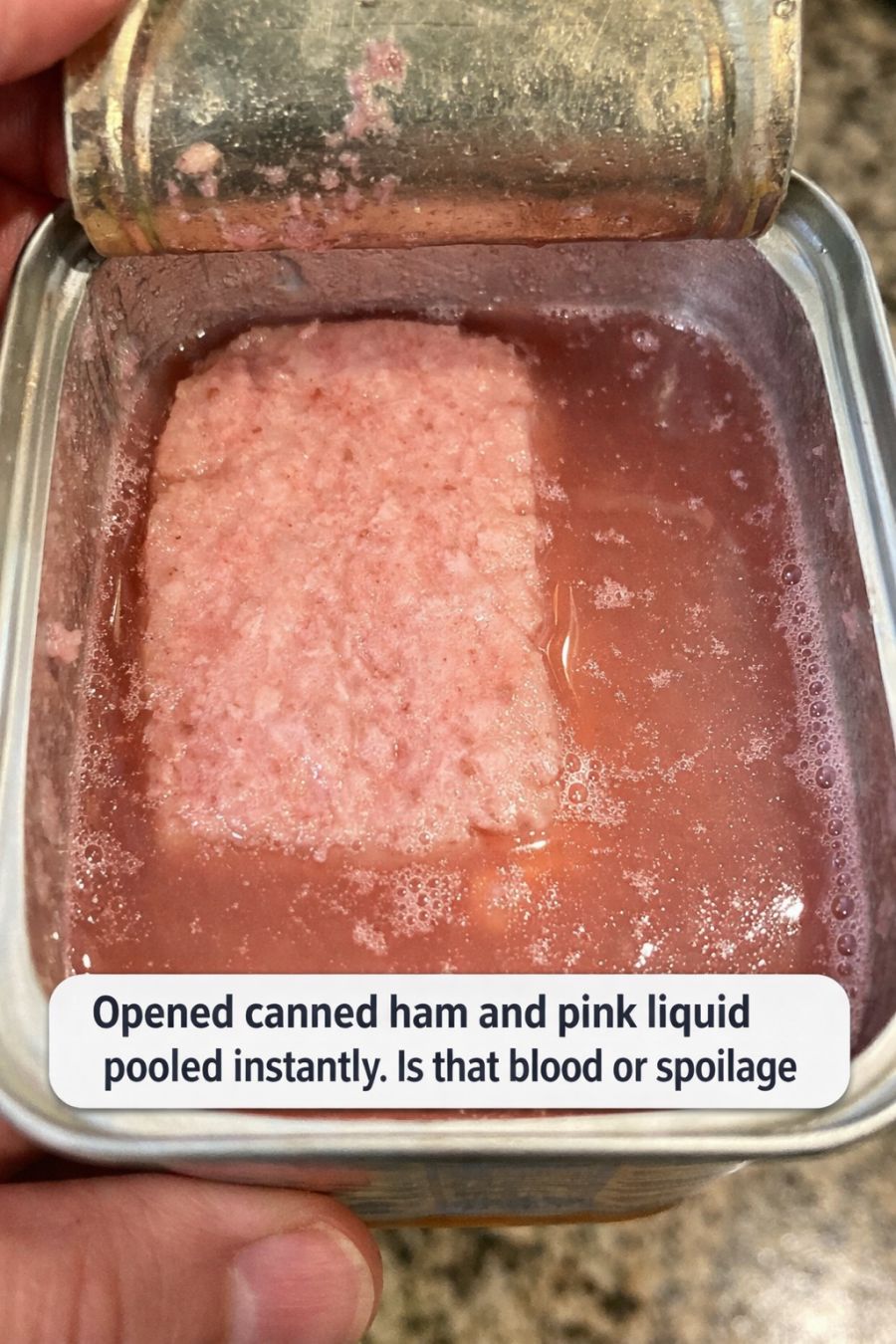
Canned ham is a convenient and popular food option for many households. It offers a long shelf life and a reliable source of protein, making it a staple in pantries across the world. However, opening a can of ham can sometimes present unexpected surprises, such as a pool of pink liquid. This can raise questions and concerns about the nature of the liquid and whether the ham is safe to consume.
Encountering a pinkish liquid in canned ham can be unsettling, leading to worries about whether it’s blood, spoilage, or just part of the packaging process. Understanding what this liquid is, how it behaves, and how to identify signs of spoilage is crucial for ensuring food safety. This article will delve into these aspects to offer clarity and guidance on handling canned ham safely.
1. What Is That Pink Liquid in Canned Ham, Really?
The pink liquid found in canned ham is often a mixture of the meat’s natural juices combined with curing fluids. During the canning process, hams are often cured with a solution that includes water, salt, sugar, and sodium nitrite. This brine not only helps preserve the meat but also enhances its flavor and maintains its color. The pink liquid is thus primarily composed of this brine, which can seep out when the can is opened. This is a normal occurrence and is not indicative of spoilage.
It’s important to note that the amount of liquid can vary depending on the brand and type of canned ham. Some cans may contain more brine than others, and this is often controlled during the packaging process to improve the taste and texture of the ham. Typically, the liquid should be clear to slightly pink, and not cloudy or foul-smelling.
2. How Natural Meat Juices Behave When You Open the Can
When a can of ham is opened, the meat’s natural juices, combined with the curing solution, can release a small amount of liquid. This is due to the vacuum-sealed environment inside the can, which keeps the meat moist and preserved. Upon opening, the pressure change allows these juices to escape and pool at the bottom.
These natural juices are mostly water, along with proteins and sugars that have dissolved during the curing process. This is why they might have a slightly pink tint, which is entirely normal due to the presence of sodium nitrite used in curing. The juices should feel slightly viscous, which is a normal characteristic of meat juices rather than an indication of spoilage.
3. The Role of Curing Salts and Why Everything Looks So Pink
Curing salts, particularly sodium nitrite, play a crucial role in the preservation and appearance of canned ham. Sodium nitrite is used to prevent the growth of bacteria and to preserve the meat’s color and flavor. This chemical reaction is what gives cured meats, like ham, their characteristic pink hue.
The pink color is a result of the nitrite compounds reacting with the myoglobin in the meat, forming a stable pink pigment known as nitrosomyoglobin. This process is not only safe but also desirable, as it prevents the meat from turning gray, which can be unappealing to consumers. Thus, the pink liquid and color of the ham are largely due to these curing processes and not an indication of spoilage or blood.
4. Blood vs. Brine: Key Visual Differences to Look For
Distinguishing between blood and brine is essential for ensuring the safety of the canned ham. Blood in meat products, especially in processed items like canned ham, is typically removed during processing. Therefore, encountering actual blood is rare.
Brine, on the other hand, is expected. It usually has a clear to slightly pink appearance and is often slightly salty due to the curing process. True blood would appear darker and more viscous, and its presence in canned ham would be unusual. If the liquid has a dark red color or an unpleasant odor, it may signal spoilage rather than brine.
5. The Smell Test: Odors That Signal Real Spoilage
The smell test is a reliable way to determine if your canned ham has spoiled. Fresh canned ham, when opened, should have a mild, slightly salty aroma typical of cured meats. If the ham emits a sour, rancid, or otherwise off-putting smell, it is a strong indication of spoilage and should not be consumed.
Spoiled meat often smells sour due to the growth of bacteria that produce lactic acid and other compounds as they break down the meat proteins. This can also result in a slimy texture, which further indicates that the ham is no longer safe to eat. Always trust your senses: if it smells bad, it likely is.
6. Texture and Color Changes That Mean It’s Gone Bad
Texture and color are telltale signs of spoilage in canned ham. Fresh canned ham should have a firm, slightly moist texture. If the texture feels slimy or sticky, this may indicate bacterial growth, and the ham should be discarded.
Color changes are another important factor. While canned ham is naturally pink due to curing, any discoloration such as gray, green, or brown patches can indicate bacterial or mold growth. These changes suggest the ham has gone bad and should not be consumed.
7. Safe Storage Times for Unopened and Opened Canned Ham
Unopened canned ham can be stored safely in a cool, dry place for up to 2 years. The canning process ensures that the meat remains preserved and free from bacterial contamination for long periods. Always check the ‘best by’ date on the can for guidance.
Once opened, canned ham should be refrigerated and consumed within 3 to 5 days. Transfer any unused portions to an airtight container to maintain freshness and prevent contamination. If the ham has been left out at room temperature for more than 2 hours, it should be discarded to prevent the risk of bacterial growth.
8. When to Toss It: Clear Red-Flag Signs of Contamination
There are several clear signs that indicate when canned ham should be discarded. If the can is bulging, rusted, or severely dented, it’s best to err on the side of caution and toss it, as these can be indicators of compromised safety seals and potential bacterial contamination.
If the ham inside has an off smell, discoloration, or a slimy texture, these are also red flags that the product is no longer safe to eat. Always inspect the product thoroughly and when in doubt, throw it out to avoid the risk of foodborne illness.
9. How to Handle and Store Leftover Canned Ham Safely
Handling and storing leftover canned ham properly is crucial for maintaining its safety and quality. After opening, leftover ham should be transferred to a clean, airtight container and stored in the refrigerator. This helps prevent exposure to air and contaminants that could lead to spoilage.
When reheating leftover ham, ensure it reaches an internal temperature of 165°F (74°C) to kill any potential bacteria. Consume leftovers within 3 to 5 days, and never refreeze previously frozen ham unless it was thawed in the refrigerator.
10. Expert Food-Safety Guidance on Cured Meat Juices
Experts in food safety emphasize that the liquid found in canned ham is typically a safe and expected byproduct of the curing and canning process. However, it is essential to recognize the signs of spoilage to ensure safe consumption. Always observe the appearance, smell, and texture of both the meat and the juices.
Proper storage and handling are key to preventing spoilage. Keeping canned ham at the right temperature and practicing good hygiene when preparing and storing it can help mitigate the risk of foodborne illnesses. When in doubt, consult resources like the USDA for guidelines on handling and storing meat products safely.
11. What To Do If You’ve Already Eaten Questionable Ham
If you suspect that you have consumed spoiled ham, it is important to monitor yourself for symptoms of foodborne illness. Common symptoms include nausea, vomiting, diarrhea, stomach cramps, and fever. These symptoms can appear within hours or up to a few days after consumption.
In case of severe symptoms or if you have underlying health conditions, seek medical attention promptly. Staying hydrated is crucial, especially if you experience vomiting or diarrhea. It is also wise to inform your healthcare provider about the incident, as they may advise further action or testing.
