
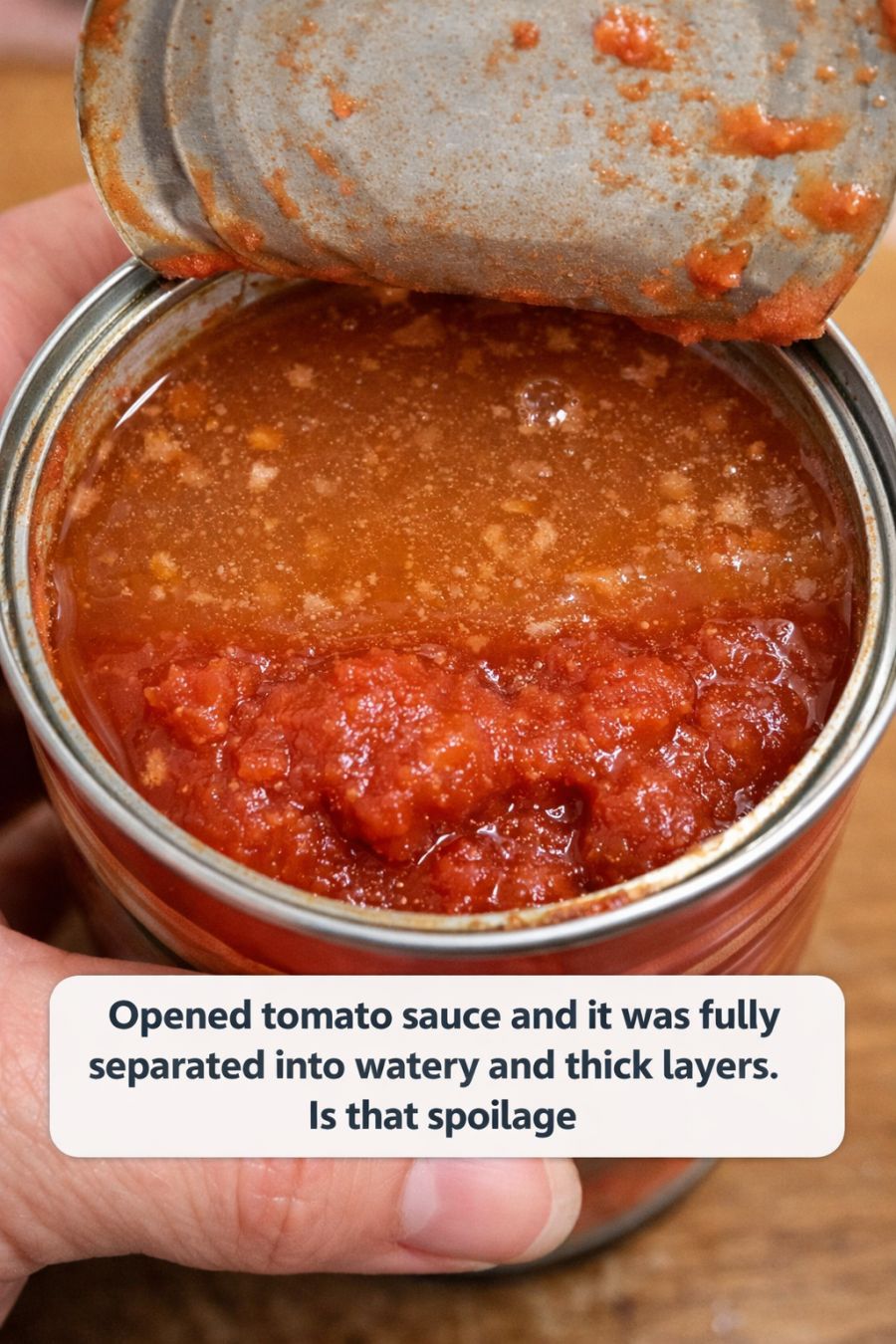
Opening a jar of tomato sauce only to find it has separated into watery and thick layers can be disconcerting. Many people immediately wonder if this is a sign of spoilage, potentially making the sauce unsafe to consume. However, separation alone isn’t necessarily a cause for alarm.
Understanding why tomato sauce separates and learning how to identify other signs of spoilage can help you determine whether your sauce is still good to use. This article will guide you through the reasons behind sauce separation, how to assess its safety, and tips for proper storage to prevent this issue in the future.
1. Why Tomato Sauce Separates Into Watery And Thick Layers
Tomato sauce separation is a common phenomenon and can occur for several reasons. One primary cause is the natural settling of ingredients over time. Tomato sauce is made up of solids, such as tomato paste and other ingredients, suspended in liquid. Over time, these components can settle, causing the liquid to separate from the denser solids.
Another reason for separation is the breakdown of emulsifiers, which are substances that help keep ingredients mixed together. If a sauce lacks sufficient emulsifiers or has been stored for an extended period, the liquid and solids may begin to separate. Additionally, temperature fluctuations during storage can exacerbate this process, causing the sauce to separate more quickly.
2. Is Separation Alone A Sign Of Spoilage?
Separation in tomato sauce is not inherently a sign of spoilage. It’s often a natural process that doesn’t affect the safety or quality of the product. However, it’s important to consider other factors when evaluating whether the sauce is still good to use.
If the sauce is past its expiration date or has been stored improperly, separation could be accompanied by spoilage. It’s crucial to inspect the sauce for other signs of spoilage, such as an off smell, mold, or color changes, before determining its safety.
3. Visual Cues: What Safe Separated Sauce Looks Like
A safe, separated tomato sauce will typically have a clear distinction between the watery layer and the thicker, more solid layer. The liquid layer should be relatively clear, while the thicker layer should maintain its original color and texture.
There should be no visible signs of mold, which can appear as dark spots or fuzzy growths on the surface of the sauce. The color of the sauce should remain consistent with its original appearance, without any unusual discoloration.
4. Red Flags: Color Changes, Mold, And Other Spoilage Signs
When inspecting your separated tomato sauce, be on the lookout for several spoilage indicators. Color changes can be a significant red flag; if the sauce appears darker or has developed any unusual hues, it may have deteriorated.
Mold is another clear sign of spoilage. If you notice any mold growth on the surface or inside the jar, it’s best to discard the sauce immediately. Additionally, if the sauce has developed an off-putting odor, it could indicate that the product has gone bad and should not be consumed.
5. The Smell And Taste Test: When To Trust Your Senses
Your senses are powerful tools in determining the safety of food. After ensuring there are no visible signs of spoilage, give the sauce a cautious sniff. A fresh tomato sauce should have a pleasant, tangy aroma. If it smells sour, rancid, or otherwise off, it’s a sign that the sauce has spoiled.
If the sauce passes the visual and smell tests, you can conduct a small taste test. Start with a tiny amount to ensure there are no off flavors. If the sauce tastes normal, it’s likely safe to use. However, if it has an unusual or unpleasant taste, it’s best to err on the side of caution and discard it.
6. How Long Opened Tomato Sauce Really Lasts In The Fridge
Once opened, tomato sauce typically lasts 5 to 7 days in the refrigerator. This timeframe can vary depending on the specific ingredients and preservatives used in the sauce. Always check the label for any manufacturer-specific recommendations.
To maximize the sauce’s shelf life, ensure it’s stored in a tightly sealed container and kept at a consistent, cool temperature in the refrigerator. If you’re unsure about the sauce’s age, it’s safer to dispose of it rather than risk potential foodborne illness.
7. Pantry Vs. Fridge: Storage Habits That Affect Separation
Storing tomato sauce improperly can lead to separation and spoilage. An unopened jar should be kept in a cool, dry place, such as a pantry, away from direct sunlight and heat sources. Once opened, transfer the sauce to the refrigerator to slow the separation process and prolong its freshness.
Temperature fluctuations can exacerbate separation, so it’s important to maintain a consistent temperature. Avoid storing the sauce in the refrigerator door, where temperatures can vary with frequent opening.
8. How To Recombine A Separated Sauce So It’s Smooth Again
If your tomato sauce has separated, recombining it is a simple process. Use a spoon or a whisk to stir the sauce thoroughly until the watery and thick layers are evenly mixed. This may take a few minutes, but the sauce should return to a smooth consistency.
If the sauce is particularly stubborn, consider transferring it to a blender or food processor and pulsing it briefly. This can help re-incorporate the ingredients more effectively, resulting in a smooth sauce ready for use.
9. When To Toss It: Clear Cases Where It’s Not Worth The Risk
There are clear situations where it’s best to discard separated tomato sauce. If there’s any sign of mold, an off smell, or unusual color changes, it’s not worth the risk of consuming potentially spoiled food.
Additionally, if the sauce has been stored for longer than the recommended time, even if it appears visually acceptable, it’s safer to dispose of it. Food safety should always be a priority, and when in doubt, it’s better to err on the side of caution.
10. Preventing Separation Next Time: Storage And Handling Tips
To prevent tomato sauce from separating in the future, ensure it’s stored properly. Always keep the lid tightly sealed to minimize exposure to air, which can contribute to separation and spoilage.
For homemade sauces, consider adding a small amount of starch, such as cornstarch or flour, as an emulsifier to help maintain consistency. Additionally, avoid storing the sauce in the refrigerator door and instead place it in the main compartment, where temperatures are more stable. These practices can help maintain the sauce’s quality and extend its shelf life.
