
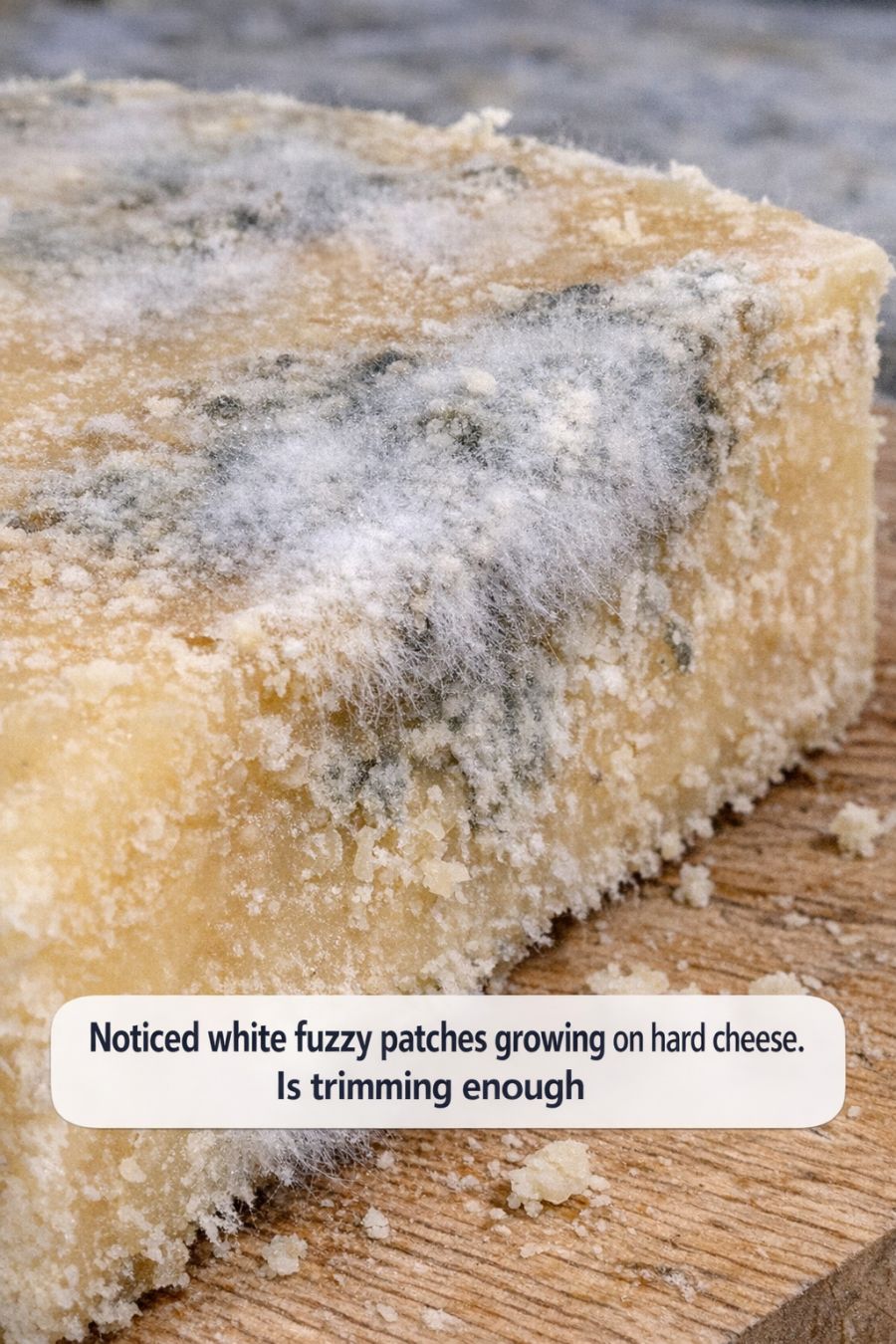
Hard cheese is a beloved staple in many households, known for its robust flavors and long shelf life. However, encountering white fuzzy patches on your cheese can be alarming, raising questions about its safety and edibility. While mold is a natural part of many cheese production processes, understanding when it is safe to consume and when it should be discarded is crucial for health and enjoyment.
In this article, we explore the nature of white fuzzy mold on hard cheese, providing guidance on when trimming is sufficient and when it’s time to throw the cheese away. With insights into safe consumption practices and effective storage techniques, we aim to equip you with the knowledge needed to handle moldy cheese confidently.
1. What White Fuzzy Patches on Hard Cheese Really Are
The white fuzzy patches you see on hard cheese are typically mold, a type of fungus that thrives in moist environments. Most commonly, this mold is Penicillium, which is used in the production of certain cheeses like Brie and Camembert. However, when it appears uninvited on hard cheese like Parmesan or Cheddar, it can be concerning.
These molds are usually surface-level and can vary in appearance from white and fuzzy to green or blue spots. The primary concern with mold on cheese is not the mold itself, which can often be harmless, but the potential for harmful bacteria that may accompany it.
2. When Mold on Hard Cheese Is Considered Safe
Mold on hard cheese is considered safe when it is limited to the surface and has not penetrated deep into the cheese. Hard cheeses have a low moisture content, which makes it difficult for mold to spread beyond the surface. As a result, the mold can often be cut away without compromising the safety of the cheese beneath.
Cheeses such as Parmesan, Asiago, and Gruyère are examples of hard cheeses where surface mold can be safely trimmed off. The key is to ensure that the mold is only on the surface and that there are no visible signs of spoilage within the cheese itself.
3. How Much to Trim: The Expert-Recommended Cut-Off Zone
Experts recommend cutting at least one inch around and below the moldy spot on hard cheese. This ensures that all traces of mold, including any spores that may not be visible to the naked eye, are removed. It is important to use a clean knife to make these cuts, and to avoid contaminating the rest of the cheese with the moldy part.
When trimming, be sure to angle the knife slightly inward as you cut around the mold, ensuring a clean removal. Once trimmed, inspect the remaining cheese for any lingering spots or discoloration, which may indicate deeper mold penetration.
4. Step-By-Step: Safely Removing Mold From Hard Cheese
1. Begin by inspecting the cheese to assess the extent of the mold growth. Ensure it is limited to the surface.
2. Use a clean, sharp knife to cut off at least one inch around and beneath the affected area. Angle the knife inward to get beneath the mold.
3. Discard the moldy section and sanitize the knife before cutting any more of the cheese.
4. Check the remaining cheese for any additional mold spots or signs of spoilage.
5. Wrap the trimmed cheese in new, clean packaging or wax paper to prevent further mold growth.
5. Signs Trimming Is Not Enough and the Cheese Should Be Tossed
If the mold has penetrated deep into the cheese, it is best to discard it. Signs of deep penetration include mold spots that have changed the color of the cheese beneath the surface or a sour smell indicating bacterial contamination.
If the texture of the cheese has become soft or slimy, or if there are signs of liquid separation, these are indicators that the cheese is no longer safe to consume. Additionally, if the mold is black or red, it could indicate a type of mold that produces harmful mycotoxins, and the cheese should be discarded.
6. Differences Between Hard, Semi-Soft, and Soft Cheeses
Hard cheeses, such as Parmesan and Cheddar, have low moisture content and a firm texture, making them more resistant to mold penetration.
Semi-soft cheeses, like Gouda and Havarti, have higher moisture content but still a firm texture. Mold may penetrate these cheeses more easily than hard cheeses, so a larger section may need to be cut away.
Soft cheeses, such as Brie and Camembert, are high in moisture and mold can quickly penetrate beyond the surface. If mold appears on these cheeses, it is often recommended to discard the entire cheese.
7. Hidden Risks: Mycotoxins, Allergies, and Foodborne Illness
Certain molds can produce mycotoxins, which are toxic compounds that can pose health risks if ingested. Although most molds on cheese are harmless, it is important to be cautious, especially with unknown or unusual molds.
Individuals with mold allergies or compromised immune systems should be particularly careful, as exposure to mold can cause allergic reactions or exacerbate existing health conditions. Furthermore, mold can sometimes be accompanied by harmful bacteria, increasing the risk of foodborne illness.
8. How Storage Mistakes Encourage Fuzzy Mold Growth
Improper storage, such as leaving cheese exposed to air or storing it in damp conditions, can encourage mold growth. Mold thrives in moist, warm environments, so cheese should be kept in a cool, dry place.
Storing cheese in tightly sealed plastic can also trap moisture, promoting mold growth. Instead, wrap cheese in wax paper or a breathable cheese paper, and place it in the refrigerator, where the temperature is consistently cool.
9. Smart Storage Hacks to Prevent Mold in the First Place
To prevent mold growth, store hard cheese in a dedicated cheese drawer or a colder section of the refrigerator, where the temperature remains consistent. Wrap the cheese in wax paper or a specialized cheese paper to allow it to breathe while protecting it from moisture.
Regularly inspect your cheese for signs of spoilage and re-wrap it in fresh paper as needed. Using a cheese dome or container can also help maintain the ideal humidity levels without trapping excess moisture.
10. When in Doubt: What Food Safety Authorities Recommend
Food safety authorities like the U.S. Department of Agriculture (USDA) recommend that when in doubt, it is better to err on the side of caution and discard moldy food. For hard cheeses, they advise cutting off at least one inch around and below the moldy area.
They emphasize the importance of using clean utensils and maintaining good hygiene practices to prevent cross-contamination when dealing with moldy foods.
11. How to Enjoy Hard Cheese Safely After Mold Appears
Once you have safely trimmed the mold from hard cheese, it can be enjoyed as usual. Pair it with complementary foods like fruits, nuts, or wine to enhance its flavors.
To ensure continued safety, monitor the cheese for any new mold growth and store it properly to extend its shelf life. By following these precautions, you can continue to enjoy your favorite hard cheeses without concern.
