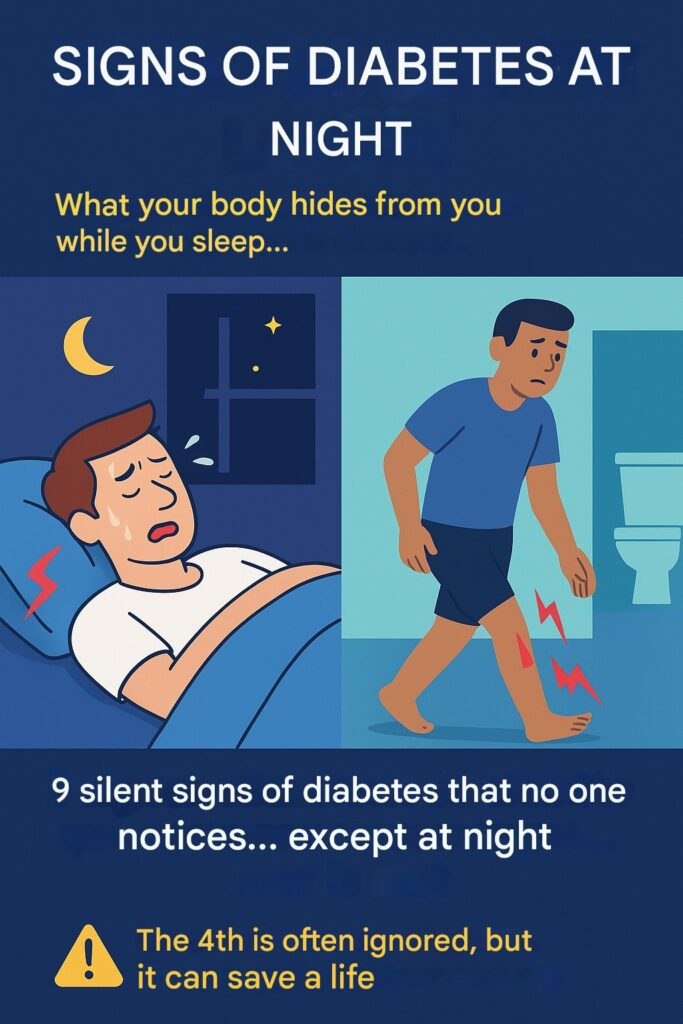
Diabetes doesn’t only show its signs during the day. For many people, some of the earliest and most noticeable symptoms appear at night, when the body is resting and blood sugar levels fluctuate. Paying attention to these nighttime signals can help with early detection and better management.
1. Frequent Nighttime Urination
Waking up multiple times to urinate can be a warning sign. High blood sugar causes the kidneys to work harder to remove excess glucose, leading to increased urine production—especially at night.
2. Excessive Thirst at Night
If you often wake up feeling extremely thirsty, it may be linked to dehydration caused by frequent urination and elevated blood sugar levels.
3. Night Sweats
Sudden or excessive sweating during sleep can occur when blood sugar drops too low (hypoglycemia), particularly in people with diabetes or those taking insulin or certain medications.
4. Restless or Poor Sleep
Fluctuating blood sugar levels can interfere with sleep quality, causing frequent waking, discomfort, or difficulty falling back asleep.
5. Tingling or Burning Sensation in Hands and Feet
Nerve damage (diabetic neuropathy) often becomes more noticeable at night, presenting as tingling, numbness, or burning pain in the extremities.
6. Dry Mouth and Throat
High blood sugar can reduce saliva production, leading to dryness that’s often more noticeable during nighttime hours.
7. Leg Cramps at Night
Muscle cramps or aching legs during sleep may be related to poor circulation or nerve issues associated with diabetes.
8. Nighttime Hunger
Waking up feeling unusually hungry may signal unstable blood sugar levels, particularly drops during the night.
9. Snoring or Breathing Problems During Sleep
Diabetes is closely linked with sleep apnea, a condition that causes breathing interruptions during sleep and often goes undiagnosed.
When to Take These Signs Seriously
Experiencing one of these symptoms occasionally doesn’t automatically mean diabetes. However, persistent or multiple nighttime symptoms should not be ignored—especially if you have risk factors such as family history, obesity, or a sedentary lifestyle.
What You Can Do
Monitor changes in sleep and nighttime habits
Maintain balanced meals and regular physical activity
Limit sugary foods before bedtime
Consult a healthcare professional for proper testing and guidance
Final Thought
Your body often speaks the loudest when everything is quiet. Nighttime symptoms can be subtle but meaningful clues. Listening early can make a powerful difference in long-term health.







Leave a Comment