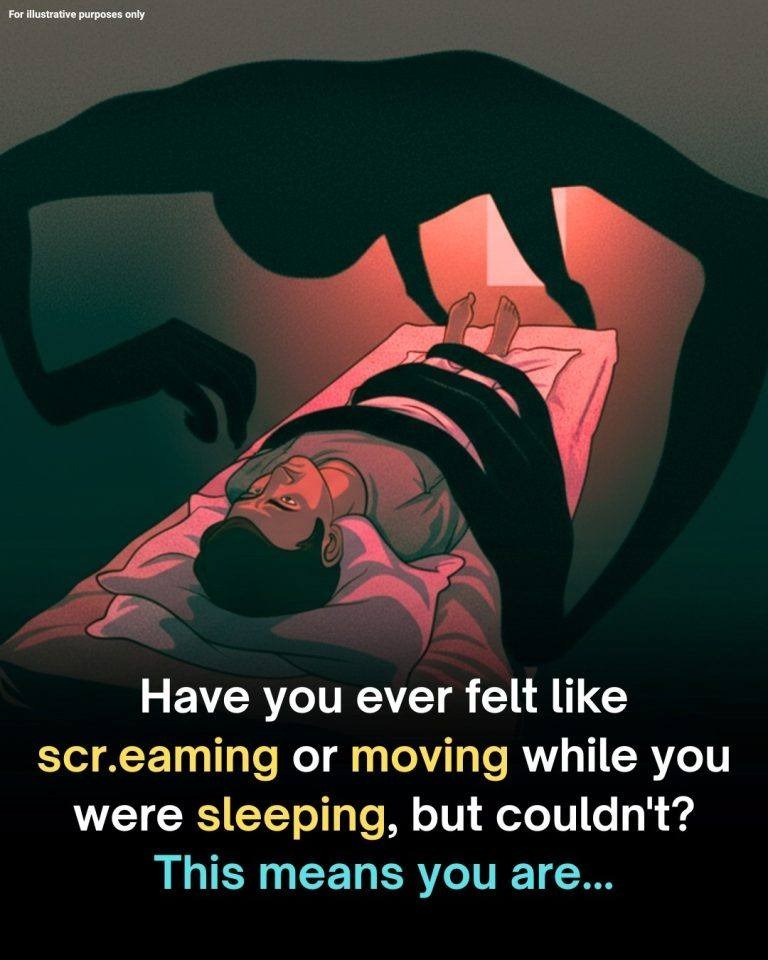
Ever Wake Up But Can’t Move? You’re Not Alone—and You’re Not Losing Your Mind
It usually starts the same way.
Your eyes open. You’re awake—or at least you think you are. You try to move, but nothing happens. Your body feels heavy, pinned to the bed. You want to speak, to scream, to lift a finger—anything—but you can’t. Sometimes there’s pressure on your chest. Sometimes you feel watched. Sometimes you see or hear things that shouldn’t be there.
Then, suddenly, it’s over.
You can move again. Your heart is racing. And you’re left wondering:
What on earth just happened to me?
If you’ve ever woken up but couldn’t move, you’ve likely experienced sleep paralysis. It’s far more common than people realize—and far more terrifying when you don’t know what it is.
Let’s break down what’s really happening, why it feels so intense, and what you can do about it.
That In-Between State: Awake but Not Free
Sleep paralysis occurs in the strange borderland between sleep and wakefulness. Your brain wakes up before your body does.
To understand why that matters, you need to know one key thing about sleep:
When you’re in REM sleep (the stage where most dreaming happens), your brain temporarily shuts down your muscles. This is called REM atonia, and it’s a safety feature. It prevents you from physically acting out your dreams.
Normally, this paralysis turns off before you wake up.
But sometimes, the timing glitches.
Your mind wakes up.
Your body stays locked.
And suddenly, you’re conscious inside a body that won’t respond.
Why It Feels So Terrifying
Sleep paralysis isn’t just about being unable to move. For many people, it comes with intense fear and vivid sensations that feel frighteningly real.
Common experiences include:
A crushing weight on the chest
Difficulty breathing (or the sensation of it)
Feeling watched or threatened
Seeing shadowy figures or shapes
Hearing footsteps, voices, or whispers
A sense of an evil or hostile presence
These experiences are known as hypnagogic (falling asleep) or hypnopompic (waking up) hallucinations. They happen because parts of your brain are still dreaming while other parts are awake.
Your fear center—the amygdala—is especially active during REM sleep. That’s why the emotions feel so intense, even though nothing is actually happening in the room.
Your brain is mixing dream logic with reality.
Why So Many Cultures Thought It Was Something Supernatural
Long before sleep science existed, people tried to explain these experiences the only way they could.
Across cultures, sleep paralysis was blamed on:
Demons sitting on the chest
Evil spirits entering the room
Witches or hags attacking sleepers
Ghosts or shadow beings
Alien abductions
In medieval Europe, it was called “the night hag.”
In Japan, it’s known as kanashibari.
In parts of the Middle East, it’s attributed to jinn.
The stories differ, but the experience is remarkably similar worldwide.
That’s because the human brain—under fear, paralysis, and hallucination—tends to generate the same kinds of threats. Dark figures. Pressure. Presence. Danger.
It feels supernatural because it overrides rational thought.
How Common Is This, Really?
More common than you think.
Studies suggest that up to 30% of people will experience sleep paralysis at least once in their lives. For some, it’s a rare event. For others, it happens repeatedly.
It’s especially common among:
Teenagers and young adults
People under high stress
Those with irregular sleep schedules
Shift workers
People with anxiety or PTSD
Those who sleep on their backs
If you’ve had it once, you’re not broken. If you’ve had it many times, you’re not alone.







Leave a Comment