
It’s something most people have seen—but rarely noticed.
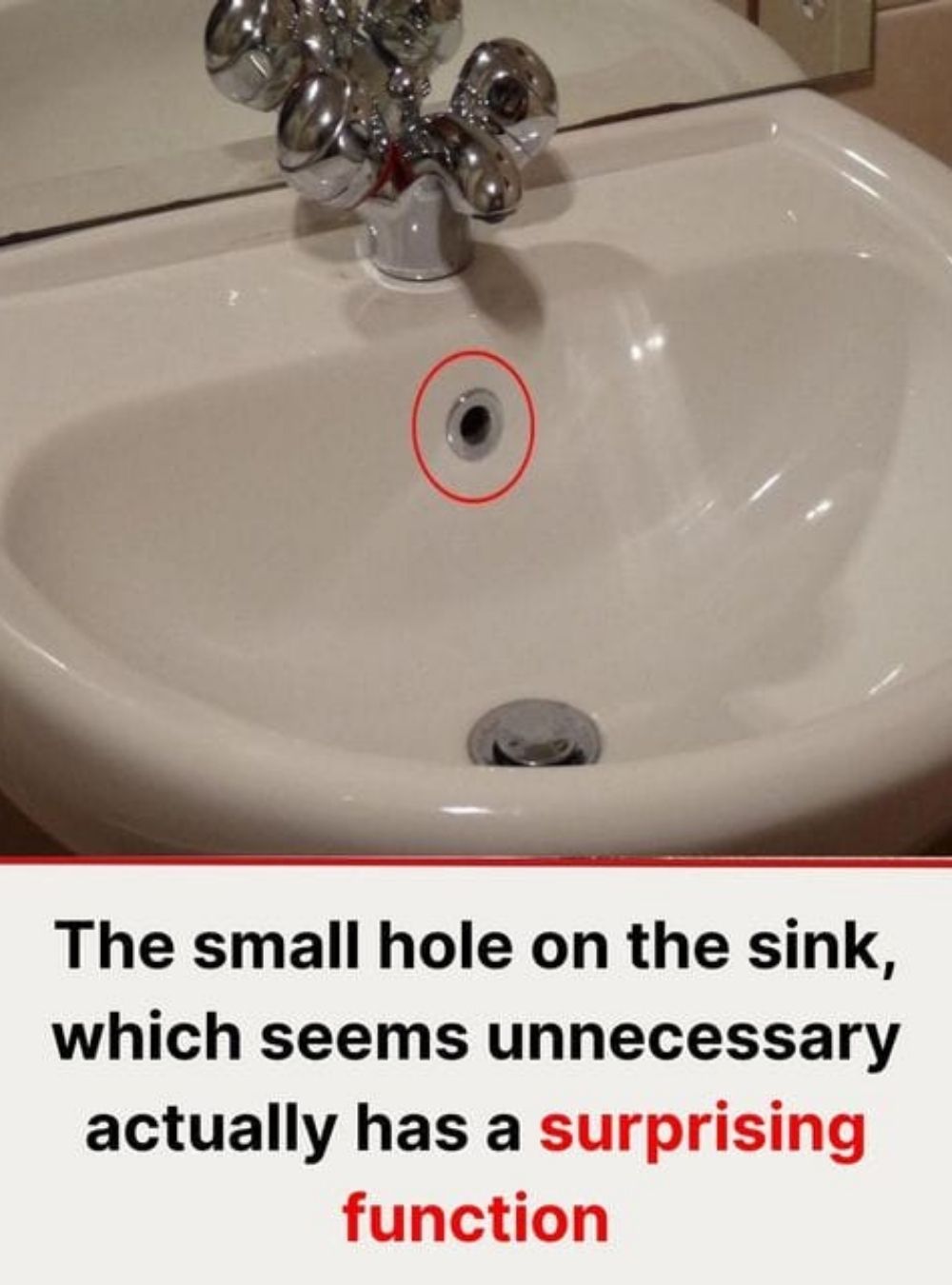
Just beneath the faucet, near the upper edge of many sinks, there’s a small opening. It blends into the porcelain or stainless steel surface so seamlessly that it often disappears into the background of daily routines. You wash your hands, brush your teeth, rinse dishes—never thinking twice about that quiet detail.
But that small opening has an important job.
It’s called the overflow drain, and it acts as a built-in safeguard against one of the most common household accidents: water spilling over the edge of the sink.
If the main drain becomes partially blocked—or if someone forgets to turn off the tap—water levels can rise quickly. Instead of overflowing onto the counter, soaking cabinets, or dripping onto the floor, the excess water is redirected through that small opening into a secondary channel connected to the drainage system. It’s a simple yet effective backup system that helps prevent damage before it happens.
Its value becomes especially clear during minor mishaps. A distracted moment. A slow drain. A child leaving the faucet running. In those situations, the overflow system quietly steps in, reducing the risk of warped wood, stained surfaces, and costly repairs.
Beyond preventing spills, the overflow opening also supports better drainage overall. By allowing air to enter the system, it helps water flow more smoothly down the main drain. This reduces the chance of standing water, which can contribute to unpleasant odors and an unclean sink environment—especially in bathrooms and kitchens where moisture is constant.
Like any part of your plumbing, the overflow channel benefits from occasional care. Over time, soap residue, toothpaste, or debris can collect inside the narrow passage. If ignored, this buildup may cause odors or reduce effectiveness. Fortunately, maintenance is simple. A small cleaning brush and warm water are usually enough to clear out residue and keep the system functioning properly.
It’s a reminder that some of the most important protective features in a home are also the least noticeable.
That tiny opening isn’t decorative.
It’s thoughtful engineering—working quietly every day to protect your space from preventable damage.
