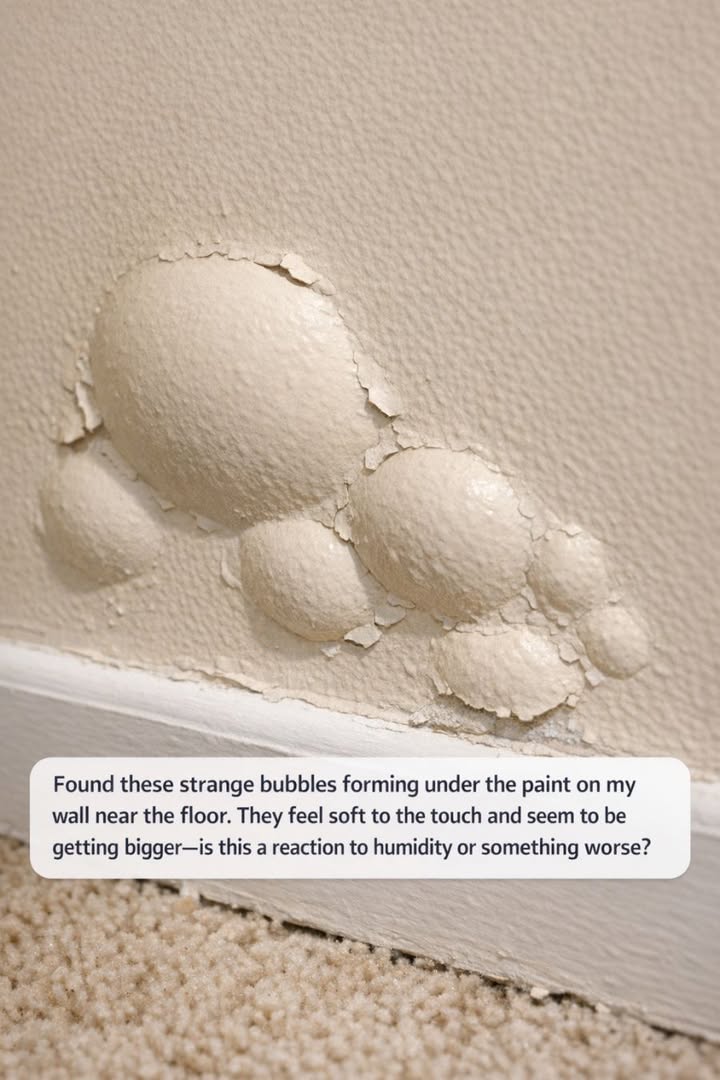
Discovering unusual bubbles forming under the paint on your wall can be unsettling, especially when they feel soft to the touch and appear to be growing. While it might be tempting to dismiss them as a harmless reaction to humidity, these bubbles could indicate a more serious underlying issue. Understanding what causes these paint bubbles is crucial for both aesthetic and structural reasons.
In this article, we will explore the various causes behind bubbling paint, from simple humidity reactions to more severe issues like leaks or rising damp. We will also provide guidance on how you can determine the cause, what steps to take to address the problem, and how to prevent it from recurring. Whether you’re dealing with a small section of bubbling paint or a more extensive problem, this guide will help you tackle the issue effectively.
1. What Those Soft Paint Bubbles Actually Are
Paint bubbles, or blisters, occur when the paint film lifts from the underlying surface. This is typically due to a loss of adhesion and can be caused by several factors including moisture, heat, or a reaction between the paint and the surface beneath it. In many cases, these bubbles are filled with moisture or air, making them feel soft to the touch.
When paint is applied to a wall that is not completely dry or has moisture trapped underneath, the increase in pressure from the moisture can cause the paint to form bubbles. This is often exacerbated in areas where the humidity levels are high or in spaces with poor ventilation. The size and frequency of the bubbles can vary, and they may appear as small as 1/8 inch in diameter or grow to several inches across.
2. How To Tell If It’s Just Humidity Or A Bigger Problem
To determine if the bubbling is purely a result of humidity or if there is a more significant problem, start by assessing the environment. Measure the humidity levels in the room using a hygrometer; levels above 60% can contribute to paint bubbling due to excess moisture in the air.
Examine the location of the bubbles. If they are concentrated near a water source, such as a bathroom or kitchen, humidity might be the culprit. However, if the bubbles are widespread or located on interior walls away from water sources, this could indicate a leak within the wall or rising damp from the floor.
3. Common Moisture Sources Hiding Behind Bubbling Paint
Several common sources of moisture can lead to bubbling paint. These include leaks from plumbing pipes within the walls, roof leaks that allow water to seep down the walls, and condensation from poorly insulated areas.
In older homes, moisture can also come from the ground through a process known as capillary action, where water is drawn up through the foundation into the walls. Identifying the source of moisture is essential for addressing the issue effectively.
4. Signs The Bubbles Point To A Leak Inside Your Wall
If the bubbles are accompanied by other signs such as discoloration, mold growth, or a musty odor, this strongly suggests a leak inside your wall. Other indicators include peeling paint, crumbling drywall, or a consistent wetness in the same area, even when it has not rained.
An infrared camera can help detect moisture behind walls without causing damage, highlighting cooler areas indicative of moisture presence.
5. When Rising Damp From The Floor Is The Real Culprit
Rising damp occurs when moisture from the ground rises through the walls by capillary action. This is especially common in older buildings without a proper damp-proof membrane. Look for a tide mark on the lower part of the wall, salt deposits, or a musty smell, which are telltale signs of rising damp.
Measuring the moisture content at different heights of the wall using a moisture meter can confirm rising damp, with higher moisture content closer to the floor.
6. Other Sneaky Causes: Poor Prep, Old Paint, And Vapor Barriers
Improper surface preparation before painting can lead to poor adhesion and subsequent bubbling. This includes failing to clean the surface, not allowing it to dry completely, or applying paint in unsuitable conditions.
Using old paint or low-quality paint can also result in bubbles, as can the presence of vapor barriers on the warm side of wall insulation, which can trap moisture and cause it to condense.
7. Quick Tests You Can Do Today To Track Down The Moisture
Perform a simple moisture test by taping a piece of aluminum foil to the wall where the bubbles are present. Leave it for 24 hours, then check for condensation. If moisture is present on the wall side of the foil, it indicates a problem within the wall.
Additionally, inspect nearby plumbing fixtures for leaks and check your roof and gutters for signs of water ingress. Using a moisture meter to check the wall’s moisture content can also provide valuable insights.







Leave a Comment