
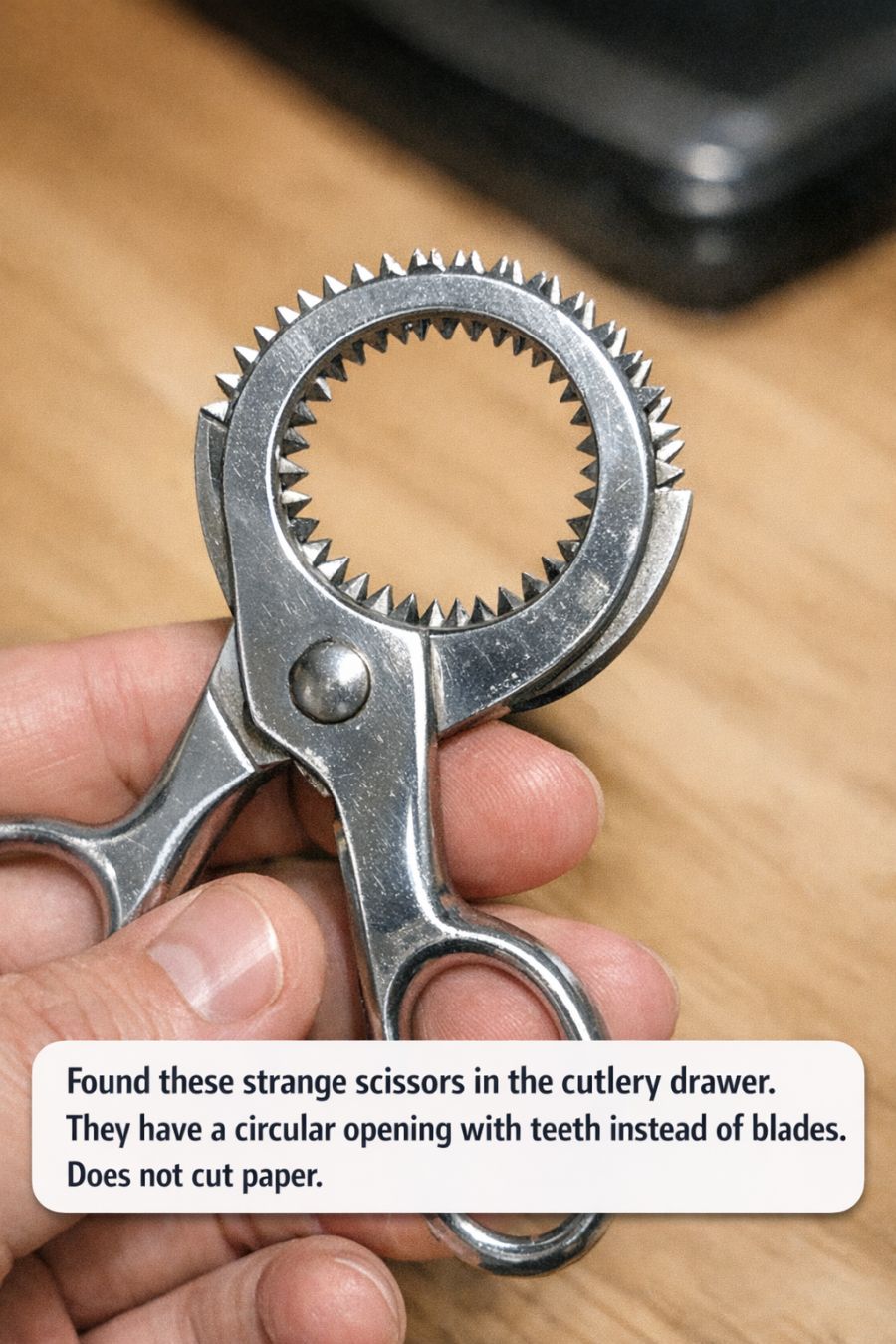
While rummaging through the cutlery drawer, you may stumble upon a peculiar tool that resembles a pair of scissors but has a circular opening lined with teeth instead of sharp, cutting blades. At first glance, you might be puzzled by its design, especially when you discover that it doesn’t perform the primary function of scissors: cutting paper. This intriguing kitchen gadget is more common than you might think, yet its purpose remains a mystery to many.
Upon closer inspection, you’ll find that this tool is designed for a very specific culinary task that doesn’t involve paper or traditional cutting. It is, in fact, an egg topper, a device crafted to neatly remove the top portion of a soft-boiled egg. This article will delve into the unique design and functionality of this tool, explaining why it has found its way into your cutlery drawer and how it can be used effectively.
1. Why These “Scissors” Don’t Cut Paper
The reason these ‘scissors’ don’t cut paper lies in their unique design. Unlike conventional scissors, which have two sharp blades that slice through materials when brought together, this tool features a circular opening with small, tooth-like serrations. These serrations are not meant to shear or slice but rather to grip and crack.
In terms of measurements, the circular opening typically spans about 1 to 2 inches in diameter, making it perfectly suited for the average size of an egg. The teeth are not sharpened to the point of cutting because their purpose is not to slice but to create a consistent crack around a specific surface. This design choice makes it ineffective for cutting paper, as the tool cannot shear or apply the necessary pressure to slice through thin or thick materials.
2. The Surprising Purpose: A Soft-Boiled Egg Topper
The primary purpose of this tool is to serve as an egg topper, specifically designed to cleanly remove the top of a soft-boiled egg. This allows for easy access to the egg’s interior without the usual mess or shell fragments.
Soft-boiled eggs are a common breakfast item, especially in European cuisines, where they are often served in egg cups. The egg topper provides a quick and efficient way to remove the top portion of the egg, creating a neat opening. This is particularly useful for ensuring that the egg’s contents remain intact and ready for consumption, whether you wish to dip toast soldiers or simply enjoy the egg with a spoon.
3. How the Circular, Toothed Opening Actually Works
The circular, toothed opening of an egg topper works through a simple yet clever mechanism. When placed over the top of an egg, the user gently squeezes the handles together, causing the serrated teeth to press against the eggshell.
This action creates a uniform crack around the circumference of the egg. The teeth are designed not to penetrate deeply but to apply enough pressure to break the shell neatly. The key is the even distribution of pressure, which prevents the shell from shattering or splintering, thus reducing the risk of shell fragments falling into the egg’s contents.
4. Step-by-Step: Using an Egg Topper Without Making a Mess
Using an egg topper is straightforward once you understand the process. Begin by placing the egg in an egg cup, ensuring it is stable. Position the circular opening of the egg topper over the top of the egg.
Gently squeeze the handles together to apply even pressure around the egg’s top. You may hear a slight crack as the teeth create a uniform break. Once the crack is formed, release the handles and lift the topper away. Carefully remove the top portion of the shell with your fingers or a small knife. This leaves a clean opening, allowing you to enjoy the egg without fuss.
5. Soft-Boiled vs. Hard-Boiled: When This Tool Shines
The egg topper is particularly effective with soft-boiled eggs due to their delicate consistency and the need for a clean opening for consumption. Soft-boiled eggs have a softer shell and a runny interior, which makes them ideal candidates for this tool.
In contrast, hard-boiled eggs, with their firm whites and yolks, do not require an opening for dipping or spooning. The shell of a hard-boiled egg is more likely to be peeled away entirely, making the egg topper less necessary. However, some people may still use an egg topper for hard-boiled eggs if they prefer to serve them in a more presentable manner.
6. Common Designs and Variations of Egg Toppers
Egg toppers come in various designs, although the basic functionality remains the same. The most common design features a circular opening with serrated teeth and scissor-like handles.
Some variations include toppers with a spring-loaded mechanism or a bell-shaped dome that uses gravity and a quick release to crack the shell. These designs may offer additional convenience or ease of use, depending on the user’s preference. Certain models also come with adjustable diameters to accommodate different egg sizes, making them versatile for various egg types.
7. Clues It’s an Egg Topper and Not a Kitchen Gadget Fail
Several clues can help identify an egg topper and distinguish it from a failed kitchen gadget. The presence of a circular, toothed opening is the most significant indicator, as this design is specific to cracking eggshells.
Additionally, the tool’s inability to cut through paper or other materials suggests its intended use is not for conventional cutting. The size and shape of the opening, typically matching that of an egg, further hint at its purpose. The tool’s construction, often involving durable materials like stainless steel, implies it is meant for repeated use in the kitchen.
