
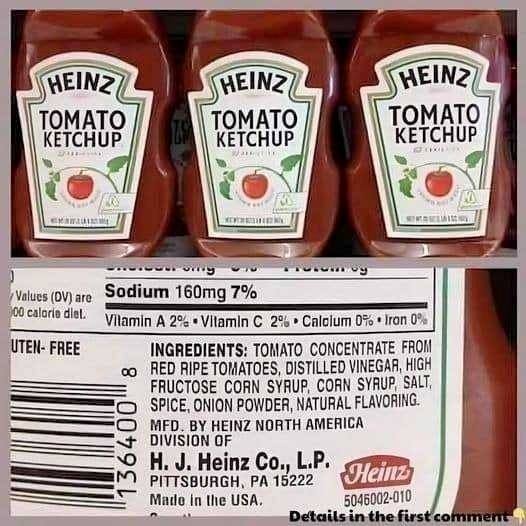
Heinz Ketchup has been a pantry staple for more than a century. Its familiar red bottle and sweet-tangy flavor are practically synonymous with fries, burgers, and backyard barbecues. But in recent years, a growing number of consumers have started asking a bold question:
Is Heinz Ketchup really something we should be avoiding?
While “avoid it like the plague” may sound extreme, critics point to several reasons why they’re choosing to leave this iconic condiment off their shopping lists.
1. Sugar Content Raises Eyebrows
One of the biggest concerns surrounding Heinz Ketchup is its high sugar content. A single tablespoon contains about 4 grams of sugar, which adds up quickly—especially for kids who love to dip everything in ketchup.
Many nutrition experts argue that ketchup functions more like a sweetened sauce than a vegetable-based condiment, making it easy to consume far more sugar than expected.
2. High Sodium Levels
Another red flag for health-conscious shoppers is sodium. Heinz Ketchup contains roughly 160 mg of sodium per tablespoon, which can contribute to elevated blood pressure when consumed frequently.
For people watching their salt intake—or managing heart health—this is a significant downside.
3. Highly Processed Ingredients
Although Heinz has removed high-fructose corn syrup from its U.S. recipe, critics still note that ketchup remains a highly processed food. Ingredients like distilled vinegar, added sugars, and concentrated tomato paste are far removed from whole, fresh tomatoes.
Many consumers now prefer condiments with shorter, more recognizable ingredient lists.
4. Marketing vs. Reality
Ketchup is often perceived as a harmless way to get “tomatoes” into a meal, especially for children. But nutritionally, ketchup doesn’t offer the same benefits as fresh or minimally processed tomatoes, such as fiber and a broader range of vitamins.
This disconnect between perception and reality has fueled skepticism.
5. Environmental and Corporate Concerns
Beyond nutrition, some shoppers avoid Heinz due to corporate practices, including sustainability concerns, packaging waste, and large-scale industrial food production. As consumers become more eco-conscious, smaller or local brands are increasingly favored.
Healthier Alternatives to Consider
If you’re not ready to give up ketchup entirely, there are plenty of alternatives:
Organic or low-sugar ketchups
No-added-salt versions
Homemade ketchup using fresh tomatoes and natural sweeteners
Tomato chutneys or sauces with fewer additives
These options can deliver flavor without the excess sugar and sodium.
