
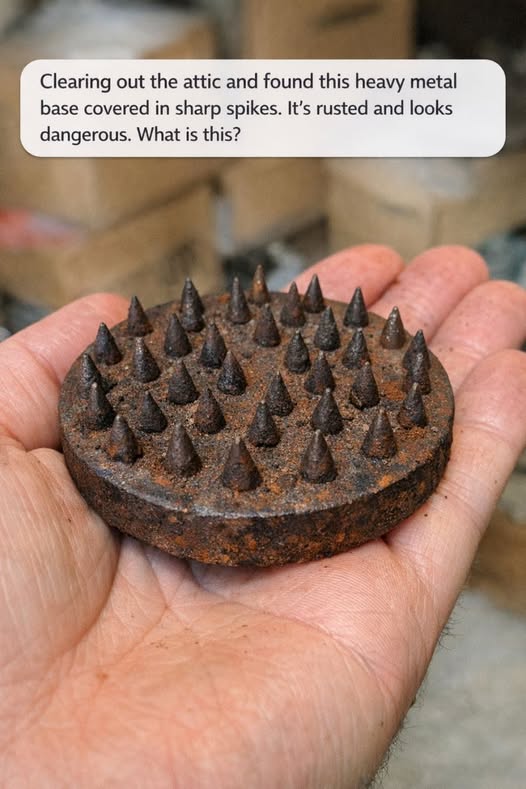
Clearing out the attic can often feel like embarking on a treasure hunt. Among the forgotten boxes and dusty old furniture, you might stumble upon objects that are both intriguing and bewildering. Recently, while rummaging through the attic, one such curious item was discovered: a heavy metal base covered in sharp spikes. It was rusted and appeared dangerous, leading to immediate questions about its origin and purpose.
While at first glance, this object might seem like a relic from a medieval armory or a part of a decommissioned machine, there’s a more likely explanation. This spiky, rusted metal base could be a vintage flower frog—a tool once popular in the art of floral arranging. Before jumping to conclusions, however, let’s explore the nature of this mysterious find and how to handle it safely.
1. First Things First: Is This Spiky Metal Object Dangerous?
The initial concern with any sharp, rusted object is the potential for injury or tetanus, a bacterial infection that can result from puncture wounds made by rusty objects. This spiky metal base likely has spikes ranging from 0.5 to 1 inch in height, which can certainly cause harm if stepped on or mishandled. It’s crucial to approach the object with care, wearing thick gloves and ensuring it is placed somewhere safe and out of the way until further investigation can be conducted.
While it may look menacing, the danger primarily lies in mishandling the object. If children or pets have access to the area, make sure it is stored in a secure location. Furthermore, if you plan to handle the object, ensure you have an up-to-date tetanus vaccination, just as a precaution.
2. The Most Likely Answer: A Vintage Metal Flower Frog
Despite its daunting appearance, this spiky object is most likely a flower frog, a tool used in floral arrangements to hold flowers in place within a vase. Flower frogs were especially popular in the early to mid-20th century before floral foam became widely available. They come in various styles, but the heavy metal base with protruding spikes is a classic design.
The spikes, or pins, allow for the stems of flowers to be positioned securely in a vase, creating a stable and visually appealing arrangement. The base of these metal frogs is typically circular or dome-shaped, often with a diameter between 2 to 6 inches. This design holds the flower stems upright and allows for more creative control over the arrangement.
3. How Flower Frogs Were Used in Old-School Floral Arranging
Flower frogs were essential tools for florists and hobbyists alike, allowing for precise placement of stems in an arrangement. The spikes, or pins, provided a sturdy hold for each stem, keeping them in place despite the weight of the blooms or the flow of water within a vase. This method provided a level of stability not achievable with loose stems.
These tools were particularly useful for intricate designs, where exact placement of each flower was necessary to achieve the desired aesthetic effect. By securing the stems in a flower frog, arrangers could create complex and structured floral displays that maintained their appearance over time.
4. Key Clues That Confirm It’s a Flower Frog, Not a Weapon
To confirm the identity of your metal object as a flower frog, look for certain key features. A true flower frog will have an evenly spaced array of spikes designed to hold flower stems. The base should be broad enough to provide stability and often features a rounded or flat bottom.
Additionally, inspect the object for any manufacturer markings or stamps, which might indicate its origin as a floral tool. The presence of a flat, solid base with uniformly sharp spikes is a strong indicator that this object is indeed a flower frog and not some other type of spiked implement.
5. Other Objects It Might Be (And How to Rule Them Out)
While a flower frog is the most likely identity for this spiky metal object, there are other possibilities, albeit less common. It could be an industrial tool component, a decorative item, or even a part of a defensive trap. To rule these out, examine the construction and design—flower frogs are typically simple in design, meant for utilitarian purposes.
Industrial components often feature threaded sections or attachment points for machinery, which a flower frog lacks. Decorative items would likely have aesthetic elements beyond simple spikes. By assessing these features, you can reasonably conclude whether the item is a flower frog or something else.
6. How Old Is Your Flower Frog? Dating Clues in Rust, Shape, and Weight
Determining the age of your flower frog involves examining several factors. The degree of rust can indicate age, as older frogs are likely more corroded unless they have been well-maintained. The design can also offer clues; older models often have more ornate construction or a heavier weight compared to modern versions.
Weight is another indicator—vintage flower frogs are typically made of heavier metals such as lead or cast iron, whereas more recent ones might use lighter materials. Examining any maker’s marks or stamps can also provide information about the era in which it was produced.
7. What It’s Worth: Collectible Value of Vintage Flower Frogs
The collectible value of a vintage flower frog depends on several factors, including its age, condition, rarity, and design. Pristine examples with unique designs or markings from well-known manufacturers can fetch higher prices among collectors.
In general, older and more ornate flower frogs are more desirable, especially if they are in good condition with minimal rust or damage. The market for these items varies, with prices ranging from a few dollars for common examples to several hundred for rare or particularly beautiful pieces.
8. Safe Handling Tips for a Rusty, Spike-Covered Base
Handling a rusty flower frog requires caution to avoid injury. Always wear gloves when picking up the object, and consider using a cloth or pad underneath it to prevent scratches to surfaces. If the spikes are particularly sharp, you might want to blunt their tips slightly with a file or cover them with protective caps.
Keep the flower frog in a secure location where it won’t be accidentally stepped on or brushed against. If displaying it, choose a sturdy shelf or case that can support its weight and keep it out of high-traffic areas.
9. Cleaning and Restoring a Rusted Flower Frog Without Ruining It
To clean a rusted flower frog, start by gently brushing off loose rust with a wire brush. Avoid vigorous scrubbing, which could damage the metal. For deeper cleaning, consider using a rust remover or a mixture of vinegar and baking soda. Soak the flower frog for a few hours, then scrub gently.
After cleaning, dry the frog thoroughly to prevent further rusting. If you wish to preserve the metal, apply a coat of clear sealant or wax to protect it from moisture. Always test cleaning solutions on a small area first to ensure they won’t harm the metal.
10. Creative Ways to Reuse or Display a Vintage Flower Frog Today
Although traditional floral arranging with flower frogs has diminished, these items can still be creatively repurposed. They make excellent conversation pieces when displayed on a shelf or in a curio cabinet. Some people use them as unconventional pencil holders or to organize small tools and art supplies.
Flower frogs can also be incorporated into modern decor as part of a vintage or industrial-themed setting. Their unique shapes and textures add visual interest, and they can be a nod to the history of floral design.
11. When to Toss It: Signs of Irreparable Damage or Real Hazard
A flower frog should be discarded if it shows signs of severe corrosion that compromises its structural integrity. If the spikes are bent or broken, making it unusable or unsafe, it might be time to consider disposal.
If the rust is too extensive and poses a health hazard, or if the metal is crumbling to the touch, the object is beyond repair. In such cases, recycling the metal is the best option, ensuring it’s disposed of in an environmentally friendly manner.
