
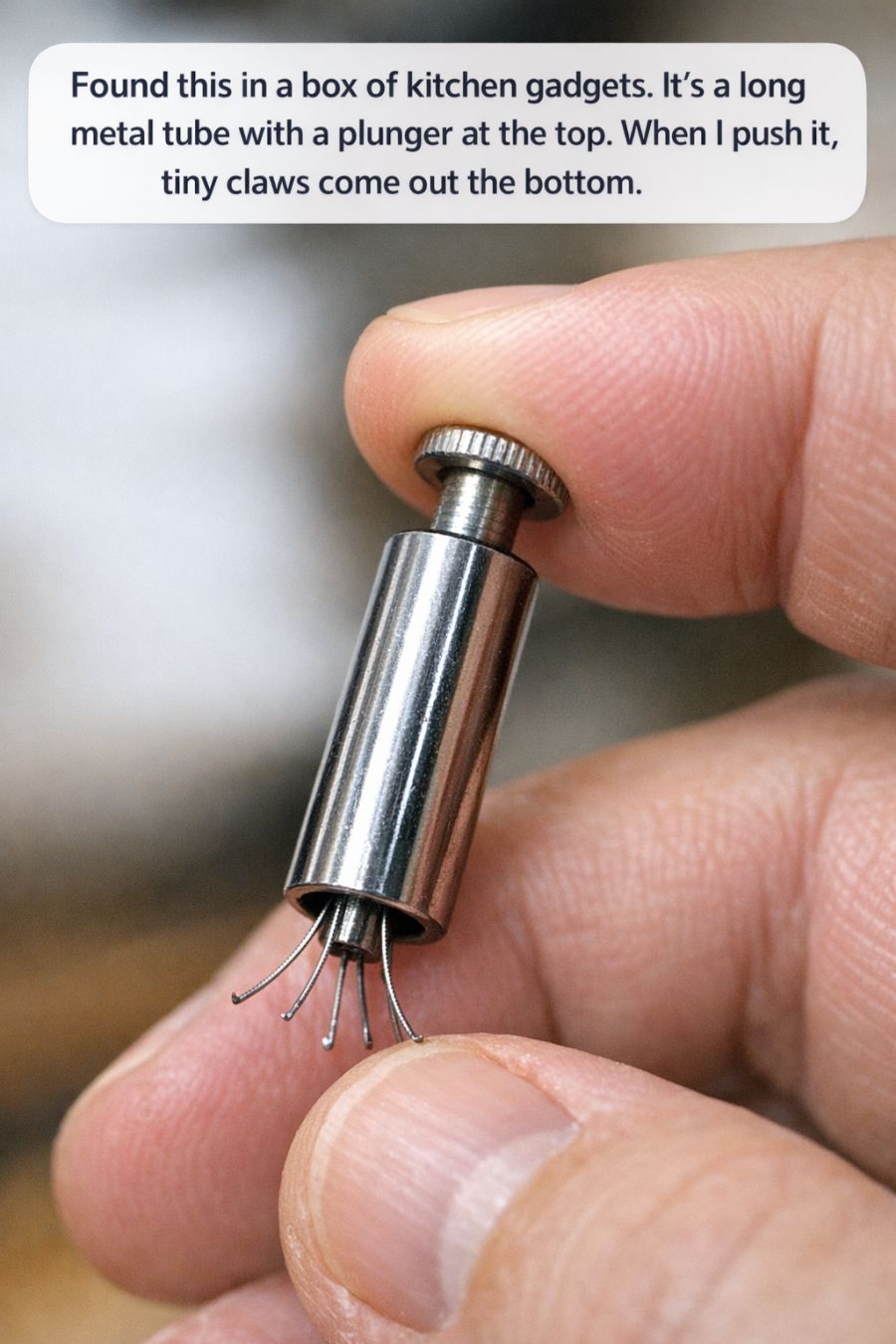
In the age of modern kitchen appliances and gadgets, it’s easy to overlook some of the quirky and peculiar tools from the past. Among the assortments of spatulas, whisks, and tongs, there occasionally emerges an item that leaves even the most seasoned cook scratching their head. One such find is a long metal tube with a curious plunger atop it. A gentle push of this plunger reveals tiny claws that extend from the bottom, resembling something out of a science fiction novel rather than a culinary tool.
Discovering such an artifact can spark a multitude of questions: What is it? How was it used? Is it still relevant in today’s kitchens? This article aims to unravel the mystery behind this peculiar gadget by delving into its history, functionality, and relevance. Let’s embark on a journey to uncover the identity and purpose of this strange yet fascinating kitchen tool.
1. The Mystery Gadget: A Strange Tube With Tiny Metal Claws
At first glance, the gadget appears to be a rudimentary tool with a simplistic design. The cylindrical metal tube typically measures around 12 inches in length and is constructed from stainless steel or chrome-plated brass. The top of the tube features a plunger mechanism; when depressed, it activates a set of three or four delicate metal claws at the opposite end. These claws, which extend approximately an inch or so, are designed to grasp small, slippery items.
The simplicity of the tool belies its ingenuity. Despite its unassuming appearance, the mechanism is quite clever, allowing users to retrieve items from jars or hard-to-reach places with precision. This gadget, often found in the depths of kitchen drawers or forgotten boxes, hints at a bygone era where such tools were not just novelty items but practical solutions to everyday problems.
2. Meet the Vintage Pickle Picker: What This Tool Actually Is
The mystery tool in question is a vintage pickle picker, a once-popular kitchen gadget designed to tackle a specific culinary challenge: retrieving pickles from jars. In the days before wide-mouthed jars and specialized tongs, getting a slippery pickle out without making a mess was no small feat.
The pickle picker was a clever invention, providing a neat and efficient solution. Its design allowed users to insert the claws into a jar, grasp a pickle firmly, and extract it with ease. This was particularly useful for those who enjoyed pickles as part of their meals or snacks and preferred not to resort to using a fork or their fingers.
3. How the Spring-Loaded Claw Mechanism Works
The spring-loaded claw mechanism is the heart of the pickle picker’s functionality. When the plunger at the top is depressed, it compresses an internal spring. This action forces the claws at the base to open outward, ready to grasp onto an object.
Upon releasing the plunger, the spring retracts, causing the claws to close tightly around the item they have captured. This mechanism allows for a secure grip on small, slippery items, making it possible to retrieve them from narrow containers without spills or accidents.
4. Why Pickle Pickers Became a Must-Have Kitchen Gadget
In the mid-20th century, when convenience foods like jarred pickles became household staples, the pickle picker emerged as an essential kitchen gadget. This was a time when entertaining guests with hors d’oeuvres and cocktail parties was fashionable, and the ability to serve pickles, olives, and other small items elegantly was highly valued.
The pickle picker’s popularity was driven by its practicality and the etiquette of serving food. It offered a hygienic way to handle pickles and other small foods, minimizing the need for direct contact and maintaining the presentation’s integrity. This made it a must-have for homemakers looking to impress their guests while maintaining a clean and efficient kitchen.
5. Variations: From Pickle Picker to Olive and Cocktail Grabber
While the original design was intended for pickles, variations of the tool quickly emerged to cater to other culinary needs. Olive grabbers and cocktail pickers, for instance, adapted the basic design for retrieving olives from narrow jars or plucking cherries from cocktails.
These adaptations often featured slight modifications, such as smaller claws or different materials, to suit the specific items they were meant to handle. Despite these variations, the core functionality remained the same, underscoring the versatility and enduring appeal of the basic design.
6. How To Safely Use a Vintage Pickle Picker Today
Using a vintage pickle picker today requires a gentle touch, given its age and potential fragility. Begin by ensuring the tool is clean and free from rust or corrosion. When ready to use, position the tool over the jar and depress the plunger to open the claws.
Gently guide the claws around the pickle or item of choice, then release the plunger to secure it. Carefully lift the item out of the jar, ensuring a steady hand to avoid spills. With proper handling, a vintage pickle picker can still be an effective and charming addition to modern kitchens.
7. Cleaning and Maintaining Old Metal Kitchen Tools
Maintaining vintage kitchen tools like a pickle picker involves regular cleaning and care to preserve their functionality. After each use, rinse the tool with warm, soapy water, paying special attention to the claw mechanism to remove any residue.
To prevent rust, thoroughly dry the tool immediately after washing. For deeper cleaning, a mixture of baking soda and vinegar can be used to scrub away any tarnish or build-up. Regular maintenance, including lubrication of the spring mechanism with food-safe oil, can extend the tool’s lifespan and keep it in working order.
