
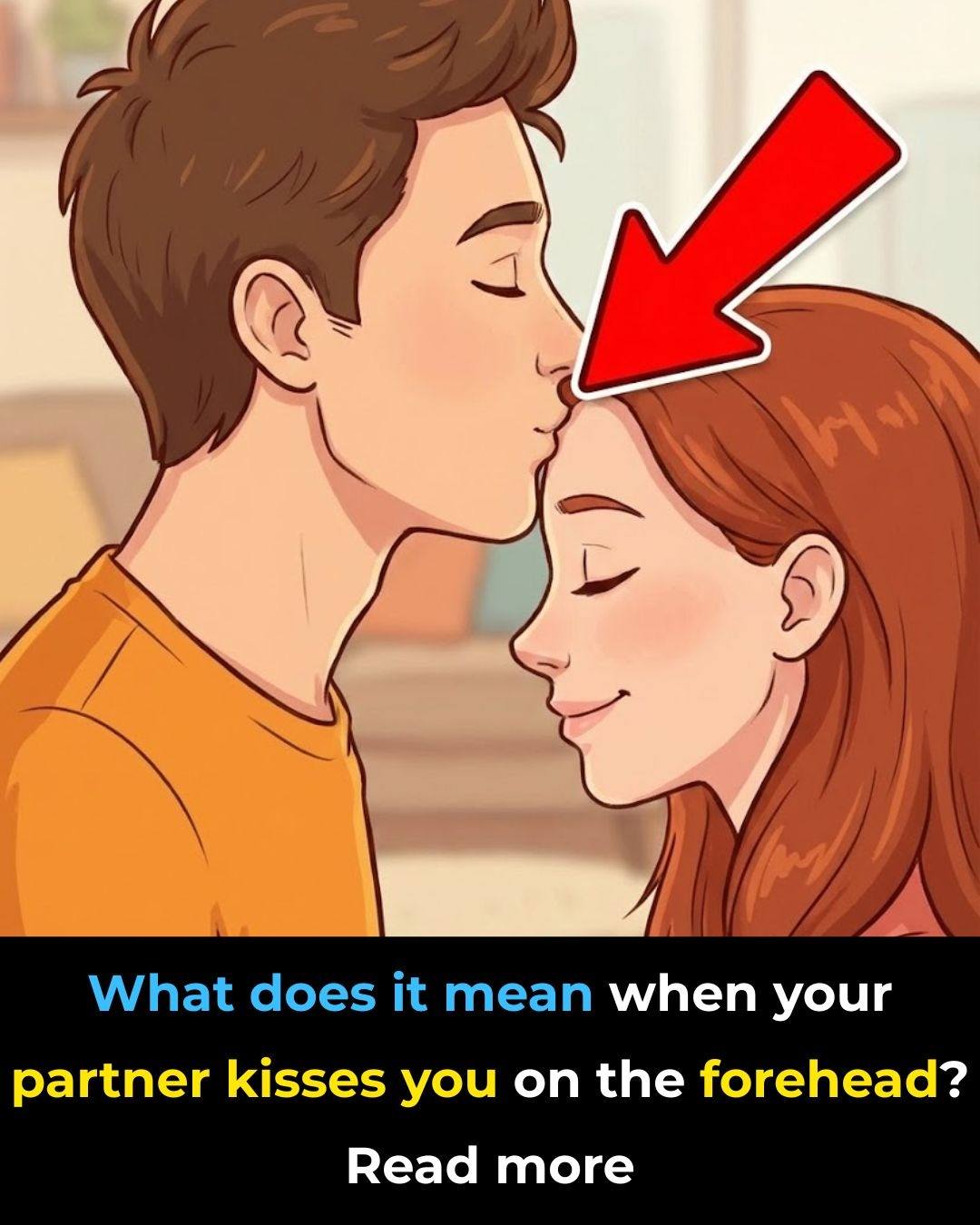
A kiss on the forehead feels gentle. Tender. Almost comforting.
It’s the kind of gesture we associate with love that’s deep and sincere—something soft that says “I care about you” without needing words. Movies romanticize it. Social media celebrates it. Many people see it as the purest form of affection.
But here’s the truth most people never talk about:
A forehead kiss doesn’t always mean the same thing.
Sometimes, it’s beautiful and reassuring. Other times, it quietly reveals a shift in how your partner sees you—and that’s where you should pay attention.
Before jumping to conclusions, let’s be clear:
👉 A forehead kiss is not automatically a red flag.
👉 Context and patterns matter more than the gesture itself.
Here’s what a kiss on the forehead really means—and when it deserves a closer look.
Why a Forehead Kiss Feels So Powerful
A forehead kiss skips passion and goes straight to emotion.
Unlike a kiss on the lips, it isn’t fueled by desire.
Unlike a hug, it’s deliberate and focused.
Psychologically, the forehead is associated with:
Vulnerability
Trust
Safety
Protection
That’s why the gesture often feels intimate—even when romance isn’t front and center.
But intimacy comes in different forms, and not all of them serve a romantic relationship equally.
The Healthy Meaning: Care, Love, and Protection
In its most positive form, a forehead kiss means:
“I care deeply about you”
“I want you to feel safe with me”
“You matter to me emotionally”
This is common in strong, emotionally secure relationships—especially during moments of stress, exhaustion, or vulnerability.
If your partner:
Also shows affection through touch, words, and attention
Maintains physical intimacy
Communicates openly
Then a forehead kiss is simply one expression of love, not a replacement for romance.
When a Forehead Kiss Can Signal Emotional Distance
Here’s where things get complicated.
If a forehead kiss starts replacing other forms of affection—especially kisses on the lips—it may signal a shift from romantic connection to emotional caretaking.
This can mean your partner sees you more as:
Someone they protect
Someone they comfort
Someone they feel responsible for
…rather than someone they desire.
This doesn’t always mean they love you less—but it may mean the dynamic has changed.
Signs You Should Pay Attention
A forehead kiss deserves closer attention if it comes with:
Fewer kisses on the lips
Reduced physical intimacy
Less flirting or romantic energy
A “gentler” but more distant tone
Increased emotional detachment
In this context, the gesture can reflect:
Emotional withdrawal
Guilt
A subconscious attempt to soften distance
A transition from partner to protector
It’s subtle—but meaningful.
What a Forehead Kiss Does Not Mean
Let’s clear up a few myths.
A forehead kiss does not automatically mean:
Your partner is cheating
Your relationship is over
They no longer care
It does mean something is worth checking in on—especially if your emotional or physical needs feel unmet.
What Really Matters: The Pattern, Not the Kiss
One gesture never tells the full story.
The real question isn’t:
👉 “Why did they kiss my forehead?”
It’s:
👉 “How do they show love to me overall?”
Healthy relationships balance:
Emotional closeness
Physical intimacy
Mutual desire
Communication
If one piece quietly disappears, the forehead kiss can become a clue—not a cause.
The Takeaway
A kiss on the forehead can be:
A sign of deep love
A symbol of emotional safety
A gesture of comfort and care
But when it replaces passion instead of complementing it, it may signal emotional distance or a changing dynamic.
Trust the pattern, not the moment.
And if something feels off?
The most powerful move isn’t suspicion—it’s conversation.
