
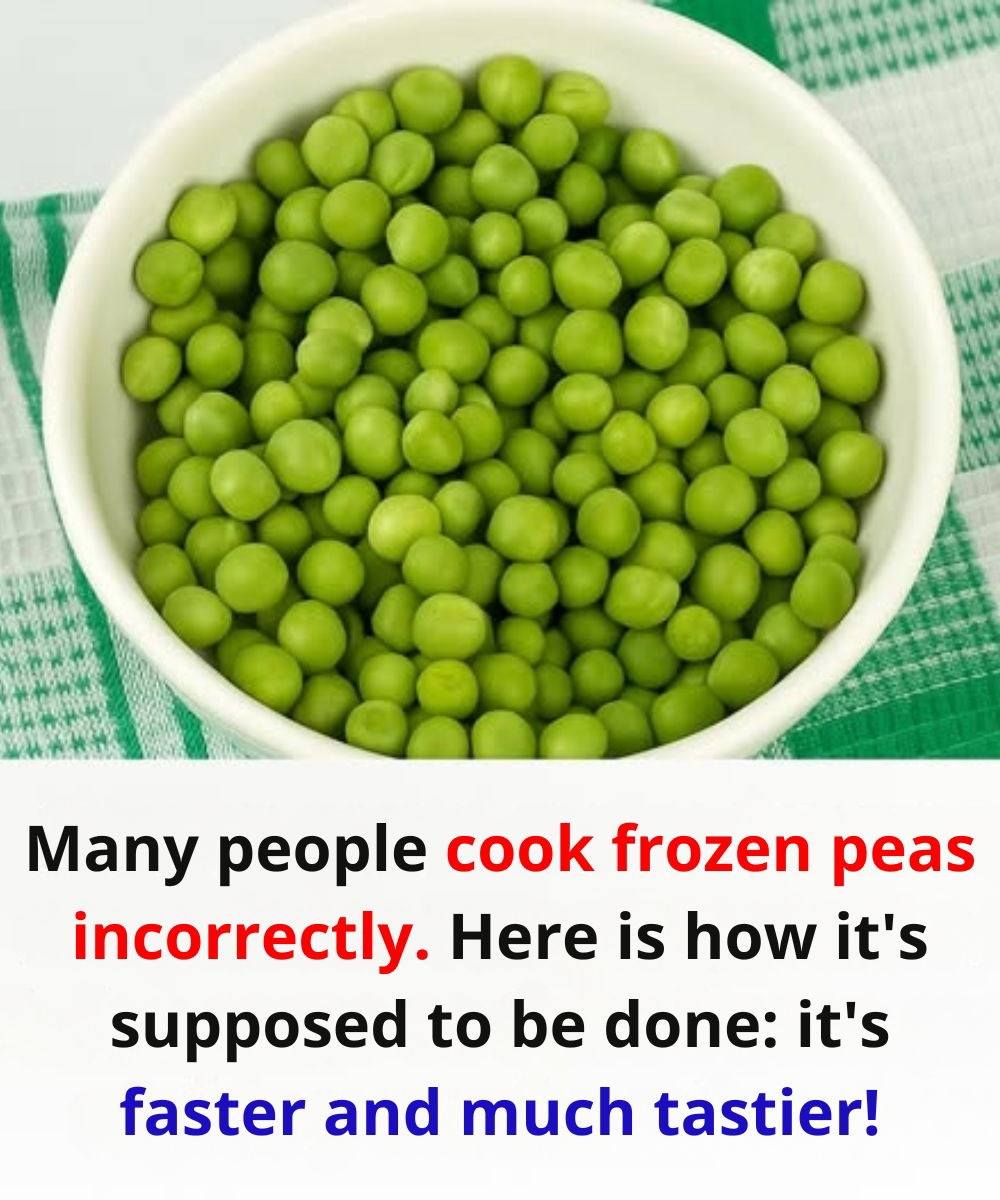
Frozen peas often get overlooked in the kitchen. They seem easy to prepare, but many people end up overcooking them, resulting in dull, mushy peas that lack flavor and vibrancy. Why? Because they’re usually tossed straight from the freezer into boiling water — a move that damages their color, texture, and nutrients.
If you want peas that are vibrant, flavorful, and perfectly tender, here’s how to cook them the right way.
✅ How to Cook Frozen Peas Properly
Unlike many other frozen vegetables, peas need a bit of special care to preserve their natural sweetness and firm bite. Follow these steps:
1. No Thawing Needed
Don’t thaw frozen peas before cooking. But instead of just dumping them into boiling water, do this:
Bring a pot of water to a boil.
Add a pinch of salt and a small amount of baking soda (this helps preserve their bright green color).
Add the frozen peas directly to the pot.
Boil for just 2 to 4 minutes, depending on your preferred tenderness.
Drain and immediately rinse under cold or ice water to stop the cooking process and lock in freshness.
🥘 Add Frozen Peas Last in Stir-Fries and One-Pot Meals
Frozen peas are already partially cooked (blanched), so adding them early in the cooking process can make them mushy. The solution?
Stir them in during the last 3 to 5 minutes of cooking.
This gently heats them through without compromising their texture or sweetness.
🚫 Avoid Over-Simmering with the Lid On
Covering peas while cooking traps steam, leading to soggy results. Try this instead:
Sauté the peas uncovered in a bit of butter or olive oil over medium heat.
Stir gently until just tender.
This brings out their natural sweetness and prevents them from becoming watery.
🌿 Bonus Tips for Perfect Peas
Add a pinch of sugar to enhance sweetness — ideal for salads or simple sides.
Pair with fresh herbs like mint or dill for a flavorful lift.
Avoid reheating peas multiple times; they taste best freshly cooked.
Use just enough water to cover the peas when boiling — no need to flood them.
Hold off on acidic ingredients like lemon juice or vinegar until the end of cooking, as acids can dull their color and soften their texture.
🟢 Final Thoughts
Frozen peas are a convenient and versatile staple, but a few small cooking tweaks can make a big difference. Skip the long boiling and give them a little extra care — you’ll be rewarded with bright, sweet, and tender peas every time.
Sometimes, it’s the little things in cooking that deliver the biggest improvements in flavor and presentation.
