
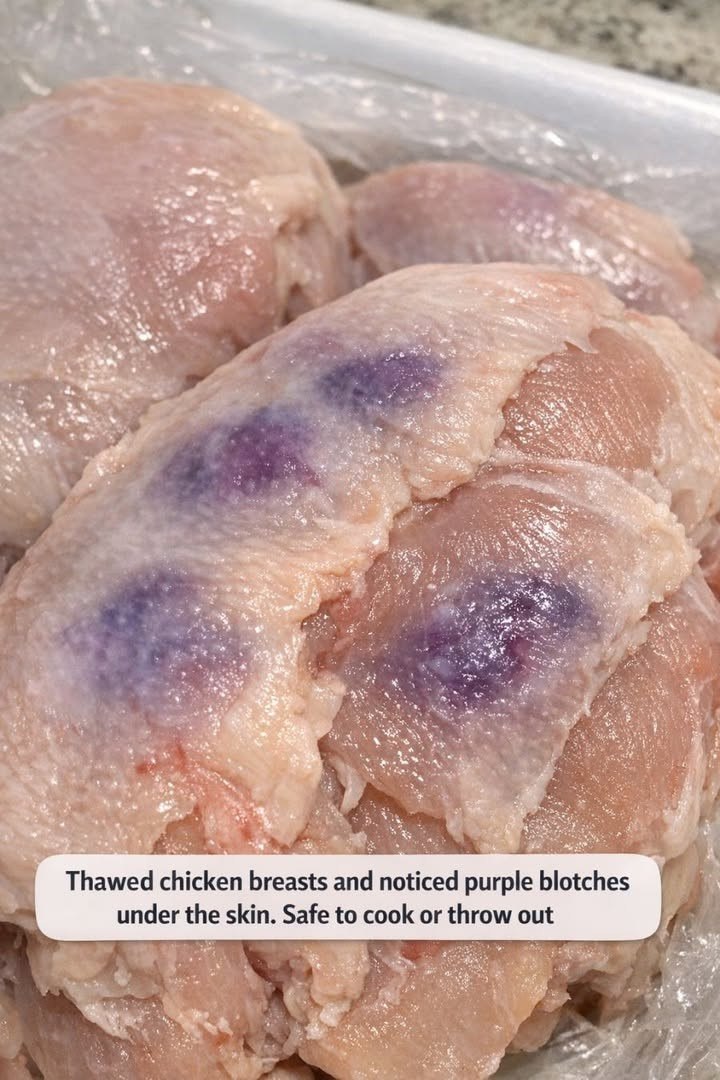
1. Blood Vessels and Bruising (Most Common & Usually Safe)
Chicken breasts can show purple, bluish, or dark red blotches due to:
Small blood vessels visible under the skin
Minor bruising from processing or handling
Blood pooling that becomes more visible after freezing and thawing
Freezing causes moisture and blood pigments (myoglobin) to concentrate, which can make these areas look darker or more dramatic than they were when fresh.
✅ Safe if:
The chicken smells normal (mild or neutral)
The texture is firm, not slimy
The color is localized under the skin, not spreading or fuzzy
You can trim away the discolored area if it bothers you visually, but it’s not required.
—
2. Oxidation (Color Change From Air Exposure)
Just like beef can turn brown, chicken can darken when pigments react with oxygen—especially after freezing.
This can cause:
Purplish or grayish patches
Uneven coloring under skin or near bone
✅ Safe if:
No sour, sulfur, or rotten odor
No sticky or slimy film
Chicken feels normal to the touch
3. Bone or Marrow Shadowing (More Common Near Bones)
Even in boneless breasts, pigment can remain near where bone was removed. Freezing makes this more noticeable.
✅ Safe and normal
This is cosmetic, not spoilage.
—
When Purple Blotches Are NOT Safe 🚫
Throw the chicken away immediately if you notice any of the following—regardless of color:
❌ Strong sour, eggy, or “rotten” smell
❌ Slimy or sticky texture that doesn’t rinse away
❌ Green, yellow, or fuzzy growth
❌ Discoloration spreading through the meat, not just under skin
❌ Package was bloated before opening
Color alone does not determine safety—smell and texture matter more.
—
Quick Safety Check (30 Seconds)
Ask yourself:
✔️ Does it smell neutral or mildly meaty?
✔️ Is the texture firm, not slimy?
✔️ Is the discoloration limited and under the skin?
If yes → Safe to cook thoroughly
If no → Trash it
—
Cooking Tip for Peace of Mind
Cook chicken to 165°F (74°C) internal temperature
Remove skin if the appearance bothers you
Avoid undercooking—proper heat kills bacteria, not color
—
Bottom Line
Purple blotches under the skin are usually harmless, especially after freezing. They’re most often bruising, blood vessels, or pigment changes—not spoilage.
