
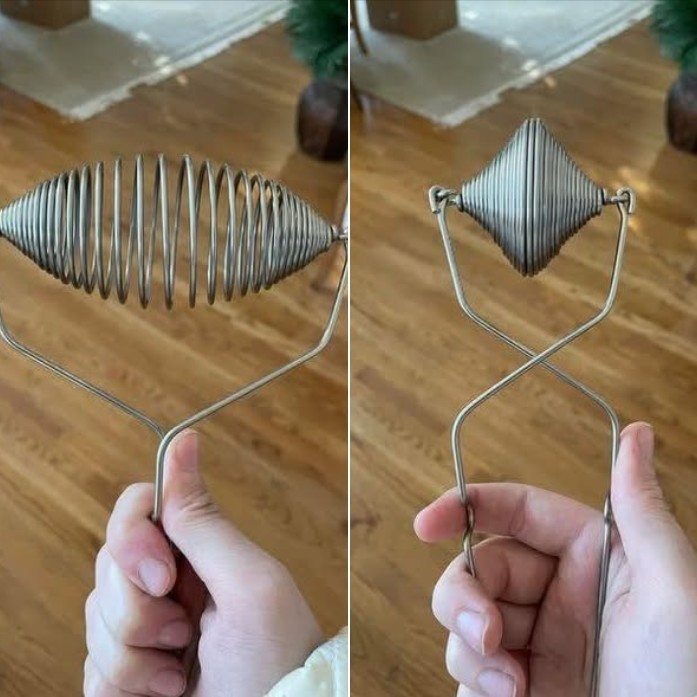
Why We Stopped Sifting (And What We Lost)
Modern flour is finer, pre-aerated, and more consistent. Food processors, stand mixers, and whisking techniques promise to “do the same thing faster.” And in many cases, they do enough.
So sifting became optional. Then unnecessary. Then forgotten.
But convenience has a cost.
When we stopped sifting, we didn’t just skip a step—we lost:
Control over texture
Precision in measuring
The subtle lightness that separates good baking from memorable baking
Whisking flour in a bowl helps, but it doesn’t fully recreate the gentle aeration or uniformity of a proper sift—especially for delicate bakes.
—
When a Sifter Still Makes a Real Difference
You don’t need to sift flour for every recipe. But when texture truly matters, the old tool still outperforms modern shortcuts.
Use a flour sifter when baking:
Sponge cakes
Angel food cake
Chiffon cake
Shortbread
Fine pastries
Biscuits and scones
Any recipe with cocoa powder or powdered sugar
In these cases, sifting isn’t nostalgia—it’s physics.
It’s Not Just About Flour
The sifter was never limited to flour alone.
It perfected:
Cocoa powder (preventing bitter clumps)
Powdered sugar (silky frostings)
Baking soda and baking powder (even rise)
Spices (balanced flavor distribution)
Many older recipes called for sifting all dry ingredients together, not separately. That step ensured even leavening and consistent taste throughout the bake.
—
Why Older Baked Goods Tasted “Different”
People often say, “Desserts used to taste better.”
The ingredients haven’t changed much. The ovens weren’t better.
The technique was.
Sifting created lighter crumb structures, finer textures, and airier rises. Cakes felt tender instead of heavy. Cookies spread evenly. Pastries melted instead of crumbling.
It wasn’t magic. It was attention.
—
The Quiet Joy of Slowing Down
There’s something deeply calming about using a flour sifter.
The soft rasp of metal.
The cloud of flour settling slowly.
The pause before mixing begins.
It forces you to slow down—to engage with the process instead of rushing to the result.
And in baking, slowing down almost always leads to better outcomes.
—
Do You Need One Today?
No.
But you might want one.
A flour sifter costs little, takes up minimal space, and asks for only a few extra seconds of your time. In return, it gives you control, consistency, and a connection to the bakers who came before you.
The ones who understood that perfection doesn’t come from speed—
it comes from care.
