
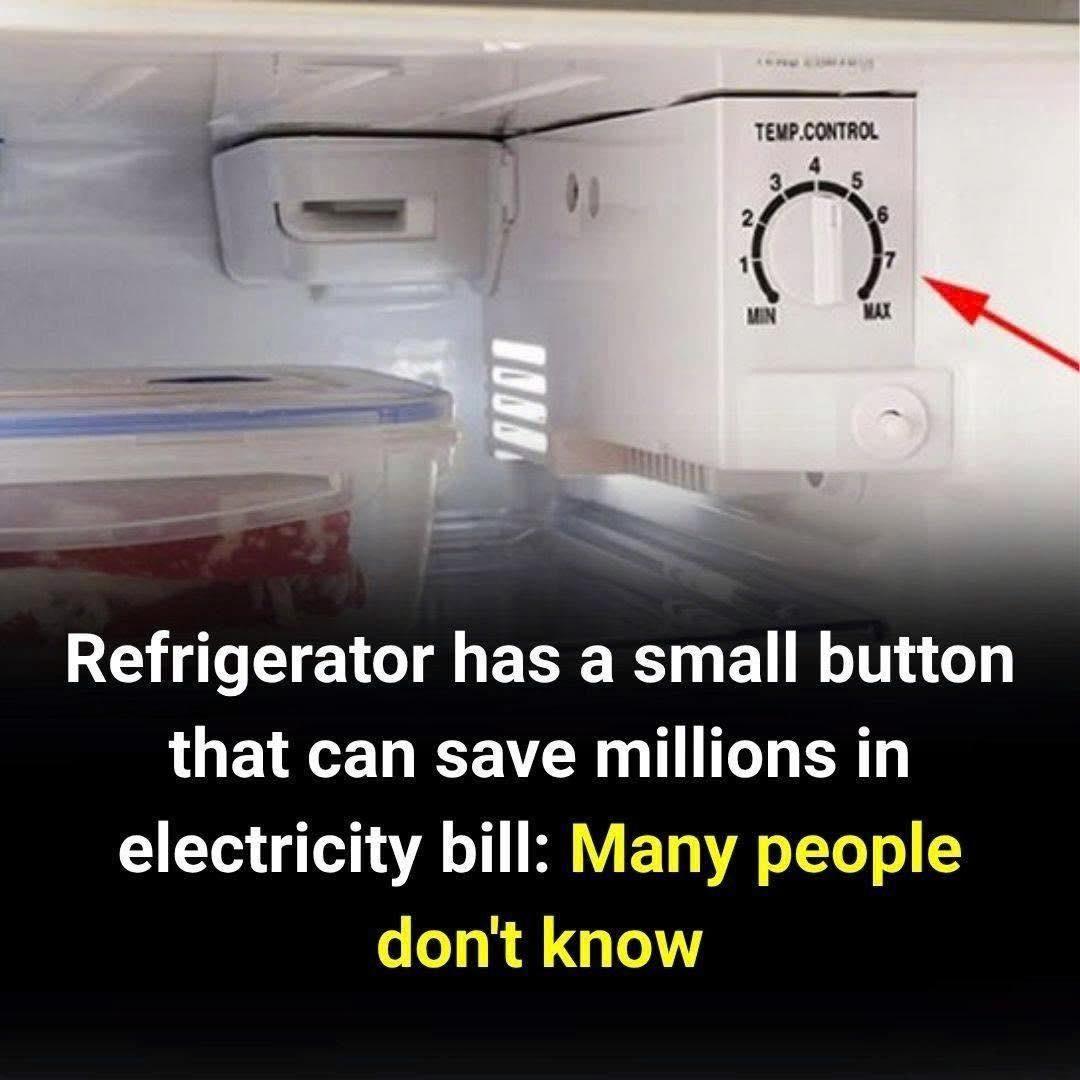
Yes — the way you’ve been setting your refrigerator could be silently adding dollars to your power bill every month. Hidden inside nearly every fridge is a small temperature dial or button that most people misunderstand, leading to unnecessary energy waste, higher electricity costs, and even shortening the appliance’s lifespan.
Here’s what you’re likely getting wrong, and how to fix it today.
1. The Temperature Dial is NOT a « Coldness » Dial
A common misconception:
Higher number = colder fridge.
Actually, the dial controls how long the compressor runs.
Higher number (e.g., 6 or 7): The compressor runs longer and more frequently → fridge gets colder → more energy used.
Lower number (e.g., 1 or 2): Shorter compressor cycles → fridge stays warmer → risk of food spoilage.
On most models, turning the dial toward MAX doesn’t cool food faster — it just overcools and wastes electricity.
2. The “Sweet Spot” for Efficiency & Safety
Experts recommend setting the dial to 3 or 4 for most refrigerators.
This keeps the fridge between 1–4°C (34–39°F) — the safe range for food — while minimizing energy use.
Too low (1–2): Risk of food not staying cold enough.
Too high (6–7): Overcooling wastes energy and can freeze items in the fridge section.
Even adjusting down by one number can cut energy use by 5–15%.
3. Find the “Energy Saver” Button (If You Have One)
Many modern fridges include a small button labeled:
Energy Saver
Eco Mode
Power Save
This button turns off the door seal heater — a small heating element that prevents condensation around the door.
In low-humidity environments (or in winter), this heater is unnecessary.
Switching it on can reduce energy use without affecting performance.
4. Manual Defrost Function
Some older models have a defrost button.
Ice buildup forces the compressor to work harder, increasing energy use by up to 30%.
If you see frost in the freezer or cooling vents:
Press the defrost button
Let ice melt completely
Restore proper airflow
Return to normal cooling
5. Supporting Habits That Save Energy
Even with the right settings, your fridge can waste energy if:
It’s too close to the wall (leave 5–10 cm / 2–4 inches for airflow)
Coils are dirty (clean every 6 months)
Door seals are leaking (close the door on a dollar bill; if it slips out easily, replace seals)
You overpack shelves or put hot food inside
6. Most People Set Their Fridge Too Cold
Surveys show many households keep their fridge 2–3°C colder than needed.
This can use as much extra electricity as leaving a lamp on 24/7.
Use a fridge thermometer to check — aim for 3–4°C (37–39°F) in the main compartment.
Bottom Line: Small Change, Real Savings
That little dial or button is more than a temperature control — it’s an energy use regulator. Setting it correctly can:
Lower your monthly electricity bill
Extend your fridge’s lifespan
Keep food at ideal temperatures safely
Check your fridge today:
Set dial to 3 or 4, press Energy Saver if available, clean the coils, and check door seals.
Over a year, these small steps can add up to noticeable savings — and a lighter bill.
Sometimes the biggest savings are hiding in the smallest buttons.
