
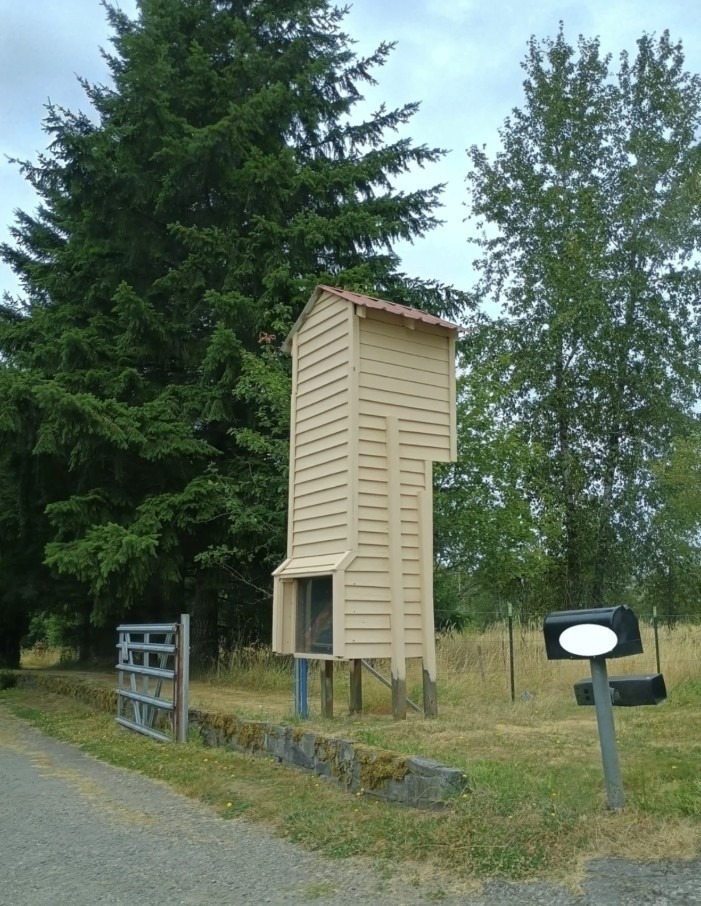
You’re driving along a quiet road when you spot it:
a tall, narrow wooden structure raised on posts, with slatted sides and a small opening. It doesn’t look like a shed. It’s not a mailbox. And it’s clearly been placed there on purpose.
So… what is it?
At first glance, it feels like one of those everyday oddities that make you slow down and think, “Who put that there—and why?” The answer is actually far more interesting (and intentional) than most people expect.
It’s Not Random — It’s a Wildlife Shelter
This structure is most likely a bat tower (sometimes called a bat house on stilts).
Bat towers are designed to provide safe roosting space for bats in areas where natural habitats—like old trees, barns, or caves—have disappeared. Instead of being mounted on buildings or poles like small bat boxes, these are freestanding, insulated, and elevated, making them ideal for larger bat colonies.
Why It Looks So Strange
Bat towers are built to solve very specific problems:
Vertical height helps bats drop into flight
Slatted wood siding creates interior crevices bats can cling to
Elevated design protects from predators and moisture
Small openings retain warmth and reduce disturbance
The design isn’t about looks—it’s about temperature control and safety. Bats need warm, stable environments to rest during the day and raise their young.
Why It’s Placed Near Roads or Fields
You’ll often see bat towers near:
Open fields
Forest edges
Water sources
Rural roads
These areas are rich in insects, which is exactly what bats are after. One bat can eat thousands of mosquitoes and crop pests in a single night, making them incredibly valuable for both ecosystems and agriculture.
Placing towers near human infrastructure helps bats thrive without moving into attics or buildings, which benefits everyone.
Why Communities Install Them
Bat populations have declined worldwide due to:
Habitat loss
Pesticide use
Climate changes
White-nose syndrome (a deadly fungal disease)
In response, local governments, conservation groups, and landowners install bat towers as low-maintenance conservation tools.
They’re quiet.
They don’t smell.
And they provide a natural form of pest control.
The Bigger Picture: Everyday Oddities With Purpose
What looks odd or unnecessary at first glance is often the result of careful planning.
This structure isn’t forgotten.
It’s not abandoned.
And it’s not a mistake.
It’s a quiet example of how humans and wildlife can share space—intentionally, thoughtfully, and without much fuss.
So next time you pass something like this and wonder “Why is this here?”—chances are, there’s a story behind it that says more about care than clutter.
