
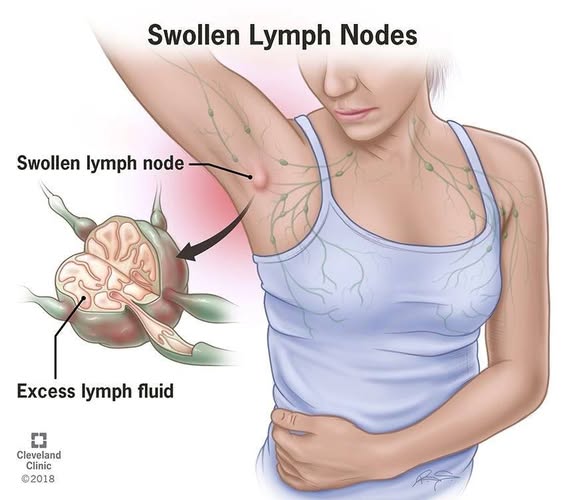
If you’ve ever felt a tender lump on the side of your neck during a cold or noticed small bumps under your jaw when you’re feeling under the weather, you’ve likely experienced swollen lymph nodes.
They can be alarming at first. Any unexpected lump in your body tends to raise questions.
Is it serious?
Is it an infection?
Should I see a doctor?
The good news is that most swollen lymph nodes are completely normal and often a sign that your immune system is doing exactly what it’s supposed to do.
Let’s break down what swollen lymph nodes are, why they happen, what they feel like, and when they might signal something more serious.
What Are Lymph Nodes?
Lymph nodes are small, bean-shaped glands that are part of your lymphatic system — a crucial component of your immune system.
You have hundreds of lymph nodes throughout your body, but they’re most noticeable in areas like:
The sides of your neck
Under your jaw
Behind your ears
In your armpits
In your groin
They act as filters for harmful substances. Inside each lymph node are immune cells (like lymphocytes) that help detect and fight infections, bacteria, viruses, and even abnormal cells.
Think of lymph nodes as security checkpoints for your body.
When something suspicious shows up — like a virus — your lymph nodes activate immune defenses. That’s when they may swell.
What Does “Swollen” Actually Mean?
Swollen lymph nodes (also called lymphadenopathy) happen when your immune system ramps up activity in response to a threat.
Normally, lymph nodes are small — often less than half an inch across — and you may not even feel them.
When they swell:
They can grow larger than a pea or even a grape
They may feel tender or painful
The surrounding area might feel warm
You may notice redness (depending on the cause)
Swelling is usually a sign that immune cells are multiplying inside the node to fight off infection.
In other words, swelling often means your body is working hard to protect you.
The Most Common Causes of Swollen Lymph Nodes
1. Viral Infections (Most Common Cause)
This is by far the most common reason.
Examples include:
The common cold
Flu
COVID-19
Mononucleosis
Measles
Chickenpox
When you have a sore throat or sinus infection, the lymph nodes in your neck often swell first because they’re filtering drainage from those areas.
They usually return to normal once the infection clears.
2. Bacterial Infections
Certain bacterial infections can cause more pronounced or painful swelling, including:
Strep throat
Ear infections
Skin infections
Infected wounds
Dental infections
In some cases, a bacterial infection can cause a lymph node to fill with pus, leading to a condition called an abscess.
3. Immune System Disorders
Autoimmune diseases — where the immune system attacks healthy tissue — can also cause lymph nodes to enlarge.
Examples include:
Lupus
Rheumatoid arthritis
In these cases, swelling may be more persistent and widespread.
4. Cancer (Less Common, But Important)
While most swollen lymph nodes are harmless, persistent swelling can sometimes be linked to cancer.
This includes:
Lymphoma (cancer of the lymphatic system)
Leukemia
Metastatic cancers (when cancer spreads from another part of the body)
Cancer-related lymph nodes are often:
Hard
Non-tender
Fixed in place (not easily movable)
Persistently enlarged
That said, cancer is far less common than infection as a cause of swollen lymph nodes — especially in children and young adults.
Where Swollen Lymph Nodes Appear — And What It Might Mean
The location of swelling can offer clues about the cause.
Neck (Cervical Lymph Nodes)
Most commonly associated with:
Colds
Sore throats
Sinus infections
Dental issues
This is the most frequent site of noticeable swelling.
